Furnace Short Cycling: Why Your Furnace Keeps Turning On and Off, and How to Fix It
A furnace is short cycling when it shuts off before the house reaches the thermostat setting, then starts again a few minutes later. Trane puts a normal furnace cycle at at least 7 minutes (Trane), and Carrier describes short cycles as often under 5 to 10 minutes (Carrier). The fastest way to find the cause is to time it: a furnace that quits within seconds has a different problem from one that quits after five minutes.
Quick answer (checked November 11, 2026)
- Check first: the air filter, closed or blocked registers and returns, and the thermostat's spot and batteries (Carrier).
- Stops within seconds of lighting: usually the flame is not being proved, often a dirty flame sensor (Carrier service guide).
- Stops after a few minutes, house still cold: usually overheating that trips the limit switch, most often from poor airflow (Trane).
- Short cycles since the day it was installed: likely an oversized furnace, which Trane calls the most common cause (Trane).
- Before anyone cuts the power: write down the status light's flash code; on some boards a power cut erases it (Carrier service guide).
Is It Really Short Cycling?
A furnace that starts often is not always a broken furnace. Trane notes that on a very cold night frequent cycling can be normal, because the house is losing heat faster, and that cycling is more noticeable on single-stage and two-stage furnaces than on modulating ones that run longer at low speed (Trane). What is not normal is a furnace that stops before the house is warm, day and night, even in mild weather.
Your thermostat gives you a yardstick. Honeywell's FocusPRO installer settings use a heat cycle rate of 5 cycles per hour for a gas or oil furnace under 90% efficiency, 3 for a furnace over 90% efficiency and 9 for an electric furnace (Honeywell). Count the starts in an hour on a mild day; a gas furnace starting far more often than its setting is being cut short by something.
One related trap: a new thermostat set up for the wrong system type. If the short cycling started the day a thermostat was replaced, ask the installer to check its system type and cycle rate against your furnace. Our thermostat not working guide covers the other thermostat checks.
What a Normal Start Looks Like
Knowing the normal sequence lets you see where yours fails. On the Carrier two-stage furnace in its service guide, a call for heat runs like this (Carrier Form 58-3T):
- The inducer motor starts and its pressure switches close.
- A 15-second prepurge runs.
- The hot surface igniter warms up for 17 seconds.
- The gas valve opens and the burners light.
- After a short trial for ignition, the flame sensor has 2 seconds to prove the flame, or the gas valve closes.
- The blower starts 45 seconds after the gas valve opens.
- The burners run until the thermostat is satisfied; the blower keeps running for a set delay afterward (90 to 225 seconds on that furnace).
Other brands use different timings; your furnace's manual has its own sequence. A furnace that stops at step 1 has a draft or venting problem, one that stops at step 5 has a flame-sensing or ignition problem, and one that reaches step 7 and quits early has an overheating, thermostat or sizing problem.
Time the Cycle: What the Pattern Tells You
Stand near the furnace for a few cycles, or watch the thermostat, and match what you see:
| What it does | Most likely | Why |
|---|---|---|
| The burners light, then go out within seconds, and it tries again | The board cannot prove the flame | On the Carrier furnace in its service guide, a flame that is not proved within 2 seconds shuts the gas valve; the control retries up to 3 more times, then locks out. A dirty flame sensor or an ignition fault is the usual suspect. |
| The inducer motor hums, the burners never light, and it starts over | The start-up check is failing before ignition | The pressure switches have to close before the igniter warms up. A blocked vent can stop them (Trane), and Carrier's codes 31 and 32 flag a pressure switch that did not close or reopened. |
| It runs a few minutes, then shuts off with the house still cold | The furnace is overheating and the limit switch is tripping | Too little air across the heat exchanger: a clogged filter, closed supply registers, blocked returns, or a blower or limit switch problem (Carrier, Trane). Code 33 on that Carrier board means a limit or rollout switch is open. |
| It shuts off early, but the thermostat says the house is warm | The thermostat is reading the wrong temperature | Sun, a nearby supply vent, an appliance or a draft can satisfy it early; weak batteries and faulty wiring cause erratic calls (Carrier, Trane). |
| Short, normal-looking cycles, rooms uneven, and it has always done it | The furnace is oversized for the house | Trane calls an oversized furnace the most common cause, especially when short cycling started on day one, or after the house was insulated. |
| It quits completely, then works again hours later | The control locked itself out and reset | On the Carrier furnace in that guide, ignition lockout and limit or rollout lockout reset on their own after 3 hours. The fault that caused it is still there. |
| It cycles more often only on the coldest nights | Possibly nothing wrong | Trane notes that frequent cycling on a very cold night can be normal, because the house is losing heat faster. |
Sequence and codes from Carrier Form 58-3T; causes from Trane and Carrier. Codes and timings differ by brand; the chart on your furnace door has the final word.
The Causes, One by One
1. A clogged air filter
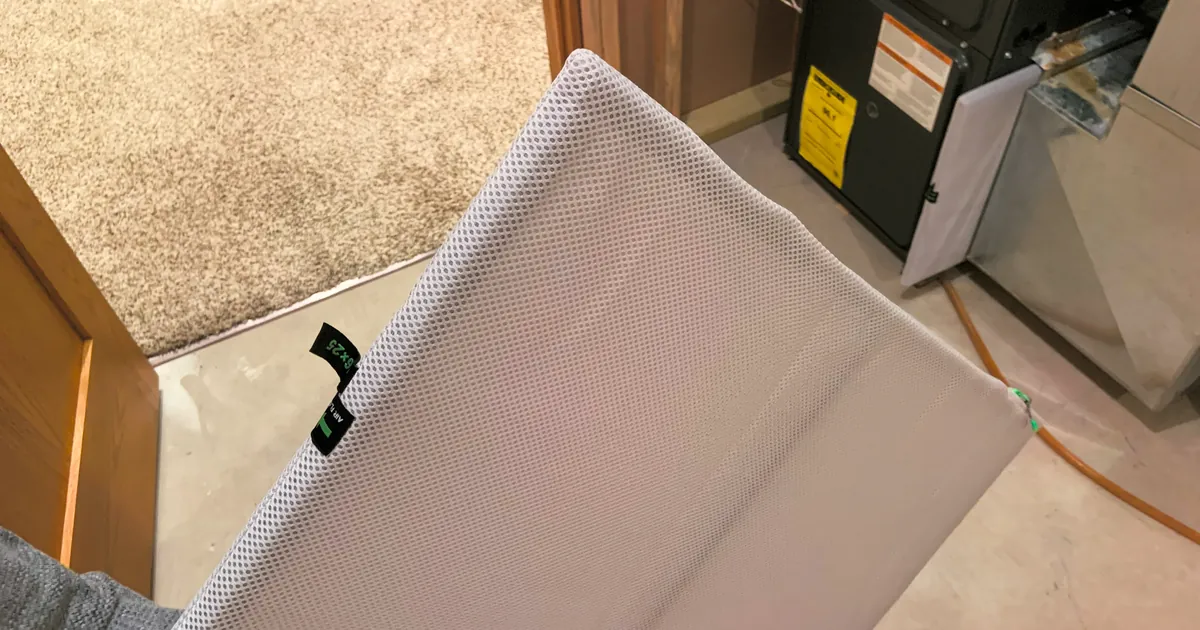
A leading cause, and the easiest to fix. A clogged filter restricts the air moving across the heat exchanger, heat builds up, and the limit switch shuts the burners off to protect the furnace; once it cools, it starts again and the loop repeats (Carrier). ENERGY STAR says to inspect, clean or change the filter once a month, and warns that a dirty filter can damage the equipment and lead to early failure (ENERGY STAR). Carrier says to replace 1-inch filters every 1 to 3 months (Carrier), and Trane gives the same 1-to-3-month range, depending on the filter (Trane). Our air filter guide covers sizes and ratings.
2. Closed registers or blocked returns
Same effect as a dirty filter. A technician quoted by Carrier sees supply registers that were closed for the summer and never reopened as a frequent, overlooked cause (Carrier), and Trane adds return vents hidden behind furniture or drapes (Trane). Open every register and clear every return before you call anyone.
3. The thermostat
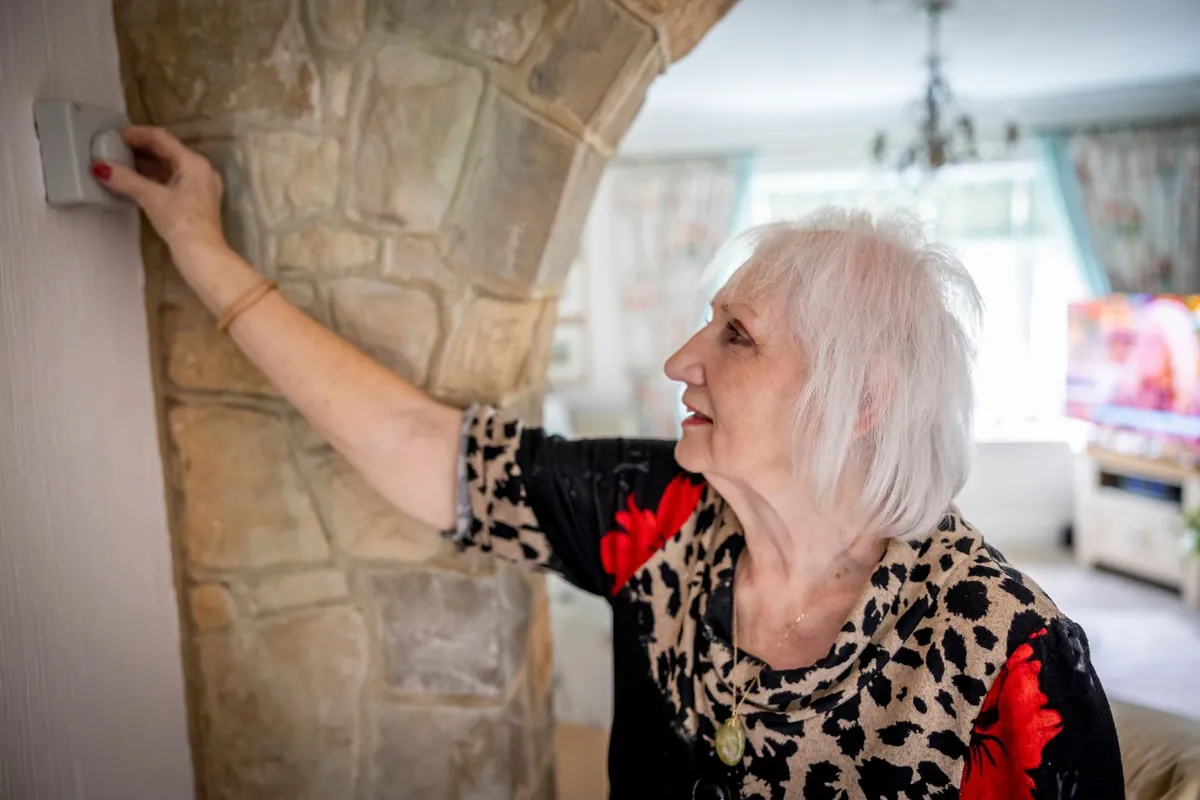
A thermostat in direct sun, next to a supply vent, near an exterior door or close to a heat-producing appliance can read the house as warm and stop the furnace early. Carrier recommends an interior wall away from all of those, and lists weak batteries and faulty wiring as other causes (Carrier). Trane notes that simply moving a badly placed thermostat can cure the short cycling (Trane).
4. A dirty flame sensor or ignition fault
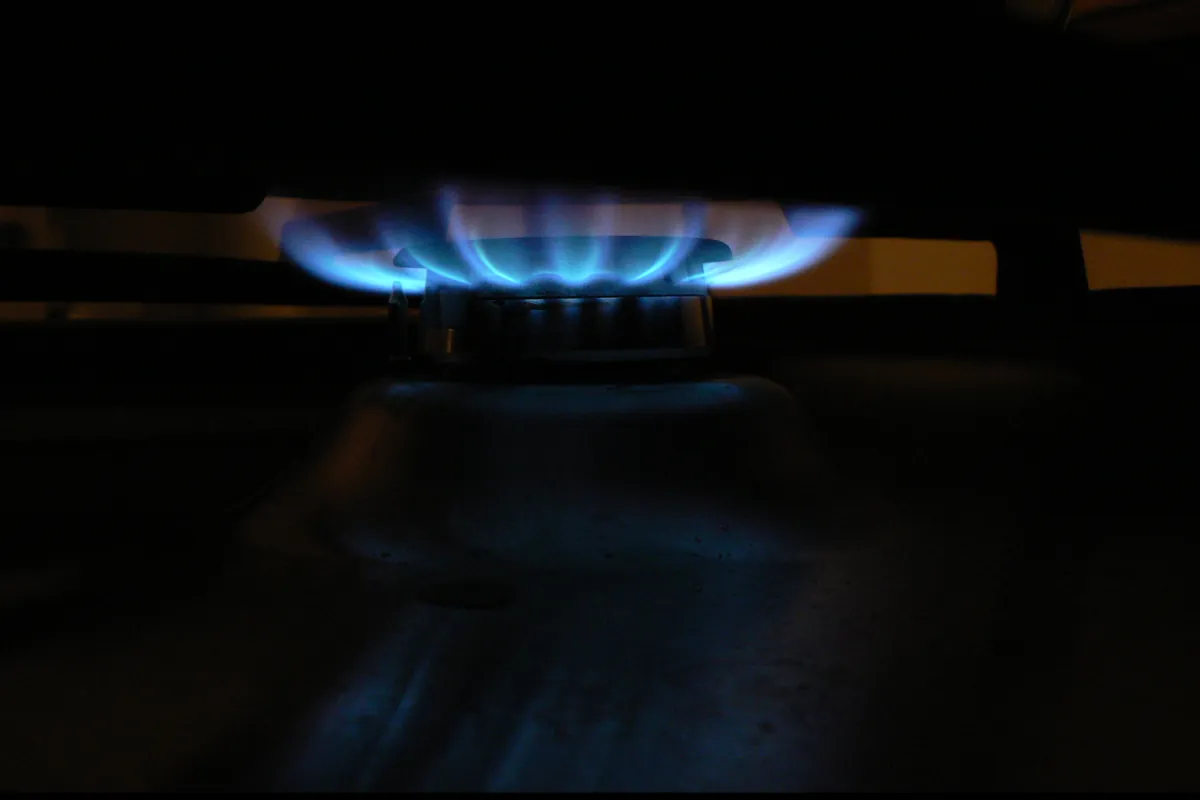
If the burners light and go out within seconds, the control is not seeing the flame. On the Carrier furnace in its service guide, the flame must be proved within 2 seconds; if not, the gas valve closes, and after up to 3 more tries the furnace goes into ignition lockout (Carrier Form 58-3T). A coated flame sensor is the classic cause. See our flame sensor guide and gas furnace won't ignite guide.
5. A blocked vent or a pressure switch problem
Before the igniter is allowed to heat, the inducer must pull enough draft to close the pressure switches (Carrier Form 58-3T). If the exhaust flue or vent pipe is blocked, Trane says the furnace shuts down to prevent carbon monoxide poisoning, and names bird nests, rodents and even a wedged toy (Trane). On a high-efficiency furnace, look at the pipes where they leave the house and clear anything blocking them; never open the vent pipe itself. Our inducer motor guide covers the motor and switch faults that look alike.
6. A faulty limit switch or a weak blower
If the filter and registers are fine but the furnace still trips on heat, the limit switch itself may be failing and shutting the burners off too early (Trane), or the blower may not be moving enough air. On Carrier's board, code 33 means a limit or rollout switch is open (Carrier Form 58-3T). Our blower motor guide covers the blower side.
7. A cracked heat exchanger
Trane lists a cracked or faulty heat exchanger as a cause: it can make the furnace overheat and shut down, cool off, light again, and overheat again. Heat exchangers are designed to last the life of the furnace, so on an older furnace this opens the repair or replace conversation (Trane). This is a technician's diagnosis, and a safety one: see the carbon monoxide section below.
8. A furnace that is too big for the house
Trane calls an oversized furnace the most common cause of short cycling, and the giveaway is timing: it has short cycled since the day it was installed (Trane). It can also appear later: Trane notes that after improvements that insulate the house better, a furnace that was sized correctly can end up oversized. The next section covers what to do about it.
The Cause a New Filter Won't Fix: Oversizing
A furnace that is too big satisfies the thermostat quickly and shuts off, which Carrier says leads to a cycle of rapid on-and-off operation (Carrier). The U.S. Department of Energy compares it to a car in stop-and-go traffic: efficiency drops with excessive cycling, and more starts and stops wear the equipment out faster (DOE, 2002). ENERGY STAR says oversized units tend to have shorter lives because they short-cycle (ENERGY STAR).
Oversizing is common because rules of thumb are common. DOE warns that sizing by rule of thumb too often produces oversized systems with too-frequent on-and-off cycling (DOE), and its fact sheet cites a large survey in which nearly 40 percent of contractors said they purposely oversized equipment (DOE, 2002).
- In New Jersey, sizing is in the code. The state's one- and two-family dwelling subcode, based on the 2024 International Residential Code, requires heating equipment to be sized with ACCA Manual S, or another approved method, from loads calculated with ACCA Manual J or another approved method (section M1401.3), and installed to the manufacturer's instructions (M1401.1) (NJ UCC, IRC 2024).
- Ask for the numbers. When you replace a furnace, ask the contractor for the Manual J heat loss of your house and how the new furnace's output compares to it. ENERGY STAR tells homeowners to make sure the contractor uses Manual J and Manual S (ENERGY STAR).
- Consider staged or modulating heat. ENERGY STAR notes that variable-capacity equipment can adjust its operation automatically (ENERGY STAR), and Carrier's two-stage furnace in its service guide picks low or high fire from the length of its previous cycles (Carrier Form 58-3T).
Our furnace replacement service includes sizing the new furnace for your house, and our NJ furnace replacement cost guide covers the budget side.
Safe Checks Before You Call
Carrier's own checklist is airflow first, thermostat second, and then a professional if the furnace still shuts down early (Carrier). In order:
- Note the status light. Many furnaces have a status light, often visible through a small window in the lower door. Count the flashes and write them down before touching the power; on the Carrier board in its service guide, stored codes are erased when power is interrupted (Carrier Form 58-3T).
- Replace or clean the filter, and note how dirty it was.
- Open every supply register and clear every return of furniture, rugs and drapes.
- Check the thermostat: fresh batteries, set to Heat, and not in sun or next to a vent, appliance or outside door.
- Look at the vent pipes outside on a high-efficiency furnace and clear leaves, nests or anything else blocking the openings.
- Time three cycles and compare them with the table above.
Stop there. Do not bypass or keep resetting a limit or rollout switch: Carrier's guide says the cause, such as a lack of combustion air, a failed part or a restricted flue, must be corrected before a manual-reset rollout switch is reset (Carrier Form 58-3T). In New Jersey, anyone performing HVACR work who does not qualify for an exemption must be licensed by the state board (N.J.S.A. 45:16A-7) (NJ HVACR Board).
What a Technician Checks
- The stored code and the start-up sequence, step by step, to see where the cycle ends.
- Airflow: filter, blower, the coil above the furnace, and the return and supply ducts.
- The flame sensor and ignition: whether the flame is being proved, and the condition of the sensor and igniter.
- Draft and venting: the inducer, the pressure switches and their tubing, and the flue.
- Safety switches: the limit and rollout switches, and why they opened.
- The heat exchanger, when overheating has no airflow explanation.
- Sizing: the furnace's output against the house's heat loss, when it has short cycled from day one.
Is Short Cycling Dangerous?
Trane would not call short cycling itself dangerous, but says it costs money in gas bills and repairs, and lists more wear on furnace parts and potential damage to the heat exchanger (Trane). Some causes are safety issues, though: a blocked flue, a tripped flame rollout switch, or a cracked heat exchanger.
Keep working CO alarms on every level of the home and outside sleeping areas, and if you suspect carbon monoxide poisoning (headache, dizziness, weakness, nausea, vomiting, sleepiness or confusion), get outside to fresh air and call 911 (CPSC). Our furnace carbon monoxide safety guide has more.
Furnace Short Cycling in Union County
Dimatic Control's gas furnace repair team handles ignition problems, flame sensors, limit switches, heat exchangers and thermostat issues across Union County. When you call, tell us:
- how long the furnace runs before it stops, and whether the burners light;
- the status light's flash pattern, if you caught it;
- when you last changed the filter;
- whether it has done this since it was installed, or started recently;
- the furnace brand, and roughly how old it is.
Furnace Still Shutting Off Early?
Dimatic Control provides gas furnace repair across Union County. Call or send a request and tell us how long it runs before it stops.
Furnace Short Cycling: Frequently Asked Questions
How do I tell if my furnace is short cycling?
Time it. Trane says a furnace cycle is in general at least 7 minutes long, and Carrier describes short cycling as on-off cycles often shorter than 5 to 10 minutes. If the burners stop after a few minutes, or within seconds, while the house is still below the thermostat setting, and it keeps happening on mild days too, the furnace is short cycling.
Why does my furnace turn on, then off, then on again?
Something is ending the cycle early. The most common reasons are a clogged filter or closed registers that make the furnace overheat and trip its limit switch, a thermostat in the wrong spot, a flame sensor that cannot prove the flame, a blocked vent, or a furnace that is too big for the house (Trane, Carrier). How long it runs before it stops tells you which group to look at first.
Why would the furnace not work for a few hours, then come back on?
It probably locked out. On the Carrier furnace described in its service guide, the control locks out after repeated failed ignitions, or after a limit or rollout switch trips, and resets itself after 3 hours. The furnace then works again until the same fault comes back, so it still needs a repair.
Can a dirty flame sensor cause short cycling?
Yes. If the sensor cannot prove the flame, the control shuts off the gas within seconds of ignition and tries again. On the Carrier furnace in its service guide, the flame must be proved within 2 seconds, and after 3 more failed tries the furnace locks out. Our flame sensor guide covers cleaning versus replacing it.
Can a dirty filter cause a furnace to short cycle?
Yes. Carrier and Trane both list a clogged filter first: it restricts airflow, heat builds up inside the furnace, and the limit switch shuts the burners off to protect the heat exchanger. ENERGY STAR says to inspect, clean or change the filter once a month.
Is a short cycling furnace dangerous?
Trane would not call short cycling itself dangerous, but it raises gas bills and wears parts. Some causes are safety problems: a blocked flue, a tripped flame rollout switch or a cracked heat exchanger. Keep working CO alarms on every level of the home, and if you suspect carbon monoxide poisoning, get outside to fresh air and call 911 (CPSC).
How much does it cost to fix a furnace that is short cycling?
It depends entirely on the cause. A clogged filter or a closed register costs you a few minutes; a flame sensor, inducer motor or control board is a parts repair; an oversized furnace is only cured by a correctly sized replacement. Ask for the diagnosis, and the quote for that repair, before you approve the work.
Sources
Every fact on this page was read from the sources below on November 11, 2026.
- Trane, Furnace Short Cycling: Causes and Solutions: In general a furnace cycle will be at least 7 minutes long; on a very cold night frequent cycling can be normal; cycling is more noticeable on single-stage and two-stage furnaces than on modulating variable-speed furnaces; common causes are thermostat issues, restricted airflow, a faulty limit switch, a cracked heat exchanger and an oversized furnace, which Trane calls the most common cause; a blocked exhaust flue or vent pipe makes the flue limiter shut the furnace down; change filters every 1 to 3 months and keep return vents clear; insulation upgrades can leave a correctly sized furnace oversized; Trane would not call short cycling itself dangerous, but it costs money in energy and repairs.
- Carrier, What Is Furnace Short Cycling? (Travis Baugh, expert review by Seth Faber, October 13, 2026): Short cycling: on and off repeatedly in cycles often less than 5 to 10 minutes; a 3-step checklist of airflow, thermostat and furnace operation; a clogged filter makes heat build up and trips the limit switch; check filters monthly and replace 1-inch filters every 1 to 3 months; mount the thermostat on an interior wall away from direct sunlight, exterior doors, windows, air vents, drafts and heat-producing appliances; size the furnace with a heating-load calculation such as ACCA Manual J; a technician quoted in the article points to closed supply registers left shut after cooling season.
- Carrier, troubleshooting guide for 2-stage induced-combustion furnaces, Form 58-3T: On a call for heat: the inducer starts, the pressure switches close, a 15-second prepurge, a 17-second igniter warm-up, then the gas valve opens; if flame is not proved within 2 seconds the control closes the gas valve and repeats ignition up to 3 more times before ignition lockout; ignition lockout and limit or flame rollout switch lockout reset automatically after 3 hours; the blower starts 45 seconds after the gas valve opens; stored status codes are erased when power is interrupted; a manual-reset rollout switch must not be bypassed, and the cause (inadequate combustion air, component failure or a restricted flue) must be corrected before it is reset; codes 31 and 32 flag pressure switches that did not close or reopened, and code 33 a limit or rollout switch that is open.
- Honeywell FocusPRO TH5000 Series thermostat installation guide (69-1922EFS): Heat cycle rate settings in cycles per hour: 5 for gas or oil furnaces of less than 90% efficiency, 3 for hot water systems and furnaces of over 90% efficiency, 9 for electric furnaces; other options 2 to 12; the thermostat must be installed by a trained, experienced technician.
- ENERGY STAR, heating and cooling maintenance checklist: Inspect, clean or change air filters once a month in a central air conditioner, furnace or heat pump; a dirty filter can increase energy costs and damage equipment, leading to early failure.
- ENERGY STAR Home Upgrade, clean heating and cooling: Oversized units tend to have shorter lives because they short-cycle; a system that is too large may not keep the home comfortable because of frequent on/off cycling; ask for the ACCA Manual J and Manual S design standards; variable-capacity equipment can adjust its output.
- U.S. Department of Energy, Right-Size Heating and Cooling Equipment, fact sheet (January 2002): The efficiency of an air conditioner, furnace or heat pump is reduced by excessive cycling, and more starts and stops accelerate wear; in one large survey nearly 40 percent of contractors said they purposely oversized equipment; Manual J and Manual S are the recommended sizing procedures.
- U.S. Department of Energy, Building Science Education, proper sizing of HVAC systems: Rules of thumb too often used for sizing lead to oversized systems and too-frequent on-and-off cycling.
- New Jersey UCC One- and Two-Family Dwelling Subcode (International Residential Code 2024, New Jersey edition, effective August 17, 2026), sections M1401.1 and M1401.3: Heating equipment is installed per the manufacturer's instructions and sized per ACCA Manual S or another approved method, based on loads calculated per ACCA Manual J or another approved method.
- NJ State Board of Examiners of HVACR Contractors, FAQ: N.J.S.A. 45:16A-7: anyone performing HVACR services who does not qualify for an exemption must be licensed by the board; N.J.A.C. 13:32A-5.1: the NJ license number must appear on invoices, websites and advertising.
- U.S. Consumer Product Safety Commission, carbon monoxide information: CO alarms on every level of the home and outside sleeping areas; symptoms include headache, dizziness, weakness, nausea, vomiting, sleepiness and confusion; if you suspect CO poisoning, get outside to fresh air and call 911.