Furnace Gas Valve Replacement Cost in 2026: Prices, Brand Ranges and the Tests That Prove It
Replacing a furnace gas valve typically costs $200 to $800 with parts and labor, about $500 on average nationally, and the valve alone is $75 to $300 (HomeGuide). The valve is often blamed for a furnace that will not light. It is the fault only when it gets 24 volts and gas, and still lets no gas through.
Quick answer (checked November 17, 2026)
- Typical price: $200 to $800 installed, $500 national average (HomeGuide); $200 to $600 (Angi); about $415 for a single-stage valve (PickHVAC).
- Nearest metro figure: $230 to $700 in New York City (Angi). No published source we found prices this job for New Jersey alone.
- The split: $75 to $300 for the valve, up to $600 for an original manufacturer part, and $125 to $500 for labor (HomeGuide).
- Proof it is the valve: 24 volts at the valve, the right gas pressure going in, and no gas coming out (Goodman).
- Repair or replace: replace. Only the manufacturer can legally repair a gas valve (HomeGuide).
National market figures, not a Dimatic Control quote.
What a Gas Valve Replacement Bill Is Made Of
In HomeGuide's ranges, labor ($125 to $500) runs higher than the valve itself ($75 to $300), unless the furnace needs an original manufacturer valve. Every range below is a published national figure.
| Line item | Range | Source |
|---|---|---|
| The valve, universal or aftermarket | $75 - $300 | HomeGuide; PickHVAC lists $65 - $300 or more |
| The valve, original manufacturer part | Up to $600 | HomeGuide |
| Labor for the swap | $125 - $500 | HomeGuide; PickHVAC puts it at 1.5 - 3 hours, $150 - $400 or more |
| Hourly rate | $50 - $150 | Angi; HomeGuide lists $75 - $150 |
| Minimum or call-out charge | $75 - $200 | HomeGuide, usually including the first hour; Angi lists $100 - $200 |
| After-hours rate | $140 - $215 an hour | HomeGuide $140 - $210; Angi $150 - $215 |
| New wiring harness | $10 - $50 | PickHVAC $10 - $30; HomeGuide $20 - $50 |
| Propane conversion kit | $50 - $100 | HomeGuide, only when the valve must be converted |
Sources: HomeGuide (September 5, 2023), Angi (2026 data) and PickHVAC (June 3, 2025).
Gas Valve Prices by Furnace Brand
HomeGuide says valve prices depend on the type and the brand. Its brand ranges, ordered by the highest valve price, lowest first:
| Furnace brand | Valve | Total replacement |
|---|---|---|
| Goodman / Amana | $70 - $165 | $195 - $665 |
| York | $95 - $240 | $220 - $740 |
| Rheem / Ruud | $80 - $300 | $200 - $800 |
| Trane / American Standard | $60 - $325 | $185 - $825 |
| Armstrong / Lennox / Ducane | $75 - $500 | $200 - $1,000 |
| Heil / Tempstar | $50 - $550 | $175 - $1,060 |
| Carrier / Bryant | $80 - $600 | $200 - $1,100 |
Source: HomeGuide, prices by brand. National figures, not a Dimatic Control quote.
What else moves the price within a brand:
- Stages. Two-stage and modulating valves cost more than single-stage valves (HomeGuide). PickHVAC puts a two-stage or variable-capacity valve job as high as $850, usually closer to $500 (PickHVAC).
- Ignition type. Valves for electronic ignition usually cost more than standing-pilot valves (HomeGuide).
- Pipe size. A 3/4-inch valve costs more than a 1/2-inch valve (PickHVAC).
- Original or universal part. Universal valves cost less; an original manufacturer valve can reach $600 (HomeGuide). Ask which one the quote includes.
- Access and the hour of the call. A furnace in a crawlspace or attic takes longer, and after-hours rates run $140 to $215 an hour (HomeGuide, Angi).
Prove It Is the Valve Before You Pay for One
A gas valve is the last step in the furnace's start-up. On the Carrier furnaces in its service guide, the inducer runs a 15-second purge, the igniter heats for 17 seconds, and only then does the control open the valve (Carrier). Anything that breaks the chain earlier looks like a dead valve. Put together with the voltage and pressure checks in Goodman's diagnostic bulletin (Goodman), the checks run in this order:
- Confirm gas reaches the furnace. The manual shut-off on the gas pipe must be open, and other gas appliances should work.
- Watch the sequence reach the valve. The inducer starts, the pressure switch closes and the igniter glows. If the igniter never glows, the valve has not been asked to open yet.
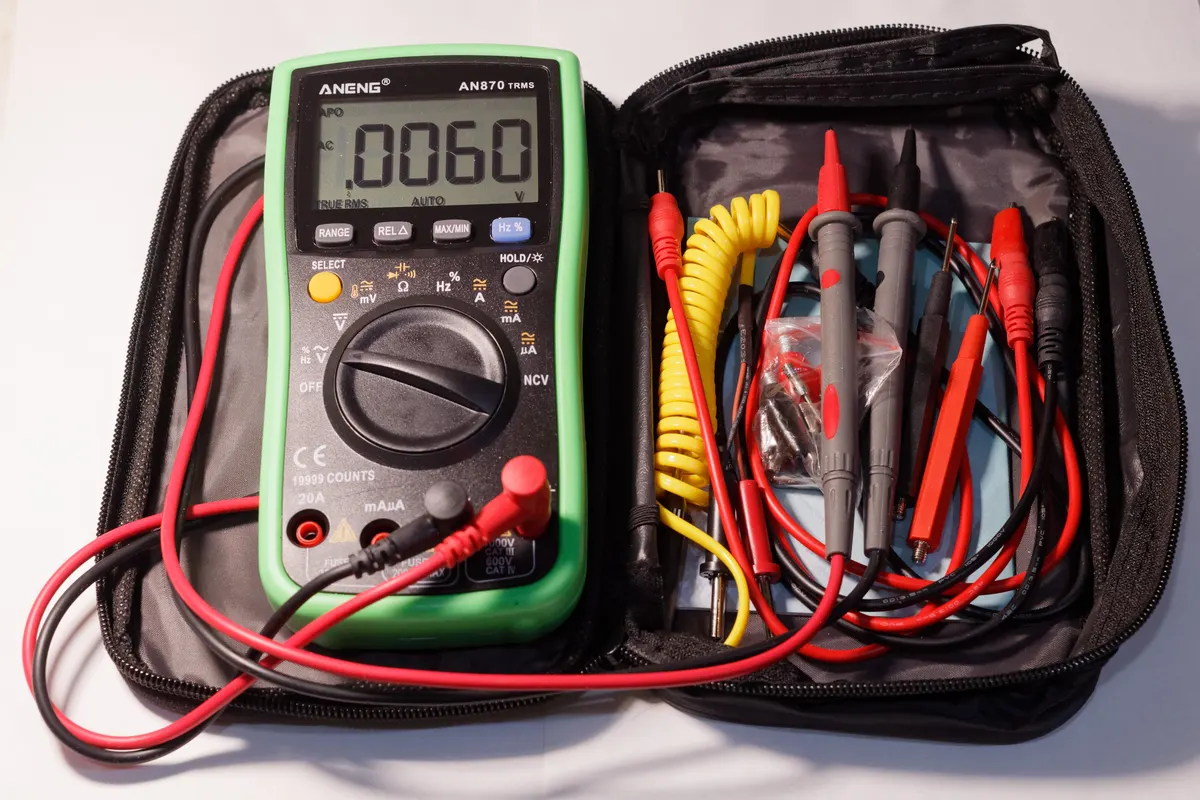
- Measure 24 volts at the valve. A meter across the valve terminals during the ignition trial shows whether the control is calling for gas. No voltage points at the board, a switch or the wiring. Goodman also notes that 24 volts on the high-fire terminal alone will not open its two-stage valves, even if the valve clicks.
- Measure gas pressure in and out. A manometer on the inlet and on the manifold side shows whether gas arrives and whether the valve passes it. Goodman's natural gas figures are 5.0 to 10.0 inches of water column at the inlet, and 1.6 to 2.2 (low fire) or 3.2 to 3.8 (high fire) at the manifold.
- Read the result. Voltage present, inlet pressure correct and no manifold pressure means the valve has failed. Low inlet pressure is a supply problem, not a valve problem.
The one sign that cannot wait
A burner flame while the furnace is not calling for heat means the valve is not closing. Carrier's code 22 reads flame with the valve switched off as a leaky or stuck-open gas valve (Carrier). Turn the furnace's gas off at the manual shut-off and call for service.
Cheaper Faults That Look Like a Bad Gas Valve
Each of these stops the furnace before or around the valve, and several cost less to fix:
The gas never reached the furnace
No part needed
A closed manual shut-off on the gas pipe is on Carrier's checklist for an ignition failure (Carrier). If the stove or water heater has no gas either, the problem is upstream of the furnace.
The flame lights, then goes out
$150 - $250 (Angi); $75 - $250 (Carrier)
That is usually the flame sensor. Carrier's furnaces close the gas valve if flame is not proved within 2 seconds, so a dirty sensor makes a good valve look bad (Carrier). See flame sensor replacement and cost.
The igniter never glows
$150 - $250 (Angi); $150 - $300 (Carrier)
Angi says the ignitor fails more than any other furnace part (Angi). On a hot-surface furnace the valve is not asked to open until the igniter has heated, so a dead igniter stops the sequence before the valve. See why a gas furnace won't ignite.
The inducer or pressure switch does not prove the draft
Inducer motor $200 - $1,500 (Carrier)
Goodman warns that an open pressure switch can look like a failed valve (Goodman). See inducer motor replacement cost.
The control board never sends 24 volts
$200 - $600 (Angi and Carrier)
No voltage at the valve points back to the board, its gas valve relay or the wiring. See furnace control board replacement cost.
A loose plug at the valve
Usually labor only
Goodman tells technicians to check that the harness is seated before calling any gas valve faulty (Goodman).
Replace the Valve, Not Clean It
Some cost guides suggest cleaning or adjusting a gas valve. HomeGuide sets the line clearly (HomeGuide):
- A visit for minor problems costs $75 to $200: diagnostics, cleaning and tightening connections.
- A valve that needs internal repair has to be replaced.
- Only the part manufacturer can legally repair a gas valve, for safety reasons.
Replace the Valve or the Whole Furnace?
Carrier publishes HomeAdvisor's figures for both: $200 to $1,000 for a gas valve, and $3,800 to $10,000 for a new gas furnace including labor (Carrier). Carrier expects a furnace to last fifteen to thirty years. A simple way to decide:
- Under 15 years old, no other major fault: replace the valve.
- 15 years old or more: Carrier suggests looking more seriously at replacement. Get both prices before you approve the valve.
- A second big repair on the same visit: a failing heat exchanger ($500 to $1,500) or inducer ($200 to $1,500) beside the valve changes the math. Our furnace replacement cost guide for New Jersey covers the other side.
Warranty: The Part May Be Covered, the Labor Usually Is Not
- Most furnace warranties cover parts for 5 to 10 years, not labor (HomeGuide). PickHVAC says most furnaces carry a 10-year parts warranty (PickHVAC).
- A covered valve still leaves you paying the labor, $125 to $500 in HomeGuide's figures.
- A do-it-yourself replacement typically voids active warranties (HomeGuide).
- On Goodman and Amana furnaces, Goodman's 2011 bulletin lists Honeywell gas valves as a required-return warranty item (Goodman). Ask the technician to keep the old valve until the claim is settled.
Questions to Ask Before You Approve a Gas Valve Quote
- What did you measure at the valve: the voltage, and the inlet and manifold pressure?
- Is the new valve an original manufacturer part or a universal valve, and what is its part number?
- Does it match the furnace: single-stage, two-stage or modulating, natural gas or propane, and the same pipe size?
- Is the valve under the furnace's parts warranty, and what is the labor on its own?
- Will you leak-test the connections and set the manifold pressure after the swap?
- Does the price include the call-out charge and any after-hours rate?
- What is your New Jersey HVACR license number? It must appear on the invoice (N.J.A.C. 13:32A-5.1).
New Jersey Rules for Gas Valve Work
- Anyone performing HVACR services in New Jersey must be licensed unless an exemption applies (N.J.S.A. 45:16A-7; NJ HVACR Board).
- Towns do not issue HVACR licenses (N.J.S.A. 45:16A-6). A town business registration is not the state license.
- The license number must appear on invoices, websites and advertising (N.J.A.C. 13:32A-5.1). Dimatic Control's New Jersey HVACR license number is 19HC00310800.
Gas Valve Failures in Union County
Gas heat is the norm here, so the gas valve is one of the parts most local furnaces depend on:
- Utility gas heats 82.9% of occupied homes in Union County, against 74.0% in New Jersey and 46.6% nationally (U.S. Census Bureau, ACS 2024).
- HVAC technicians in New Jersey earned a mean $37.30 an hour in May 2025, about 20% above the national mean of $31.14 (BLS, New Jersey; BLS, national). Labor is the larger part of this bill, so expect New Jersey quotes toward the upper half of the national ranges.
Dimatic Control's gas furnace repair team handles ignition faults, gas valves and furnace safety controls across Union County, including gas valve replacement in Union. When you call, have the furnace brand and model ready. Tell us what the furnace does when the thermostat calls for heat. That lets a technician bring the right valve and test before replacing it.
Furnace Clicking but Not Lighting?
Dimatic Control provides gas furnace repair across Union County. Call or send a quote request and tell us what the furnace is doing.
Furnace Gas Valve Replacement: Frequently Asked Questions
How much does it cost to replace a gas valve on a furnace?
HomeGuide puts a furnace gas valve replacement at $200 to $800 with parts and labor, with a $500 national average, $125 lowest and $1,000 highest reported. Angi's range is $200 to $600, and PickHVAC puts a single-stage valve at about $415. The valve alone is $75 to $300, or up to $600 for an original manufacturer part. These are national figures read November 17, 2026, not a Dimatic Control quote.
How do I know if my furnace gas valve is bad?
The usual sign is a furnace that runs its start-up but never lights, or shuts down without heat. A technician proves it with two readings: 24 volts reaching the valve when the furnace calls for gas, and correct gas pressure going in with none coming out. Goodman's diagnostic bulletin uses those two checks. A flame you can see while the furnace is off is a different and urgent sign: shut the gas off and call for service.
Can a furnace gas valve be repaired instead of replaced?
Only for minor problems outside the valve, such as a loose connection, which HomeGuide prices at $75 to $200. HomeGuide says a valve that needs internal repair must be replaced, and that only the part manufacturer can legally repair a gas valve.
How long does it take to replace a furnace gas valve?
HomeGuide says 30 to 60 minutes on average, or up to 2 hours where the furnace is hard to reach. PickHVAC budgets 1.5 to 3 hours of labor.
Is a furnace gas valve covered by warranty?
Often the part is and the labor is not. HomeGuide says most furnace warranties cover parts for 5 to 10 years but not labor, and PickHVAC says most furnaces carry a 10-year parts warranty. HomeGuide adds that a do-it-yourself replacement typically voids active warranties. Have the furnace model and serial number ready when you call.
How much does it cost to replace a gas valve on a boiler?
PickHVAC puts a residential boiler gas valve at $300 to $900, with a national midpoint near $550. That is higher than its furnace figure of about $415 for a single-stage valve.
What is the most expensive part to replace in a furnace?
In the HomeAdvisor list Carrier publishes, the draft inducer motor ($200 to $1,500), the blower motor ($400 to $1,500) and the heat exchanger ($500 to $1,500) have the highest top prices. A gas valve is $200 to $1,000 on the same list.
Can I replace a furnace gas valve myself?
In New Jersey, HVACR work must be done by a licensed contractor unless an exemption applies (N.J.S.A. 45:16A-7). The job also means opening and resealing a gas connection and setting gas pressure with a manometer, as Goodman's bulletin describes. HomeGuide notes that a do-it-yourself swap typically voids active warranties.
How long does a furnace gas valve last?
None of the manufacturer or cost sources we read gives a set life for a gas valve; it is replaced when it fails. Carrier expects a furnace to last fifteen to thirty years, and suggests looking seriously at replacement once a furnace is 15 years old or more.
Sources
Every figure on this page was read from the sources below on November 17, 2026. Prices are national market figures, not a Dimatic Control quote.
- HomeGuide, furnace gas valve replacement cost (Sarah Noel, September 5, 2023): $200-$800 average, $500 national average, $125 lowest and $1,000 highest reported; valve $75-$300, or up to $600 for an original manufacturer part; labor $125-$500; $75-$150 an hour; minimum call-out $75-$200 including the first hour; after-hours $140-$210 an hour; repair of minor problems $75-$200; only the part manufacturer can legally repair a gas valve; prices by brand; conversion kit $50-$100; wiring harness $20-$50; warranties usually cover parts for 5 to 10 years, not labor; 30 to 60 minutes, up to 2 hours.
- Angi, furnace repair cost (Paige Bennett, 2026 data): Gas valve $200-$600; furnace repair national average $318 from 27,763 projects, most pay $133-$505; labor $50-$150 an hour; small repairs often billed at a $100-$200 minimum; emergency $150-$215 an hour; the ignitor fails more than any other furnace part and costs $150-$250 to replace; flame sensor $150-$250; circuit board $200-$600.
- Angi, furnace repair cost in New York, NY (Dan Simms, October 1, 2025): Gas valve $230-$700; furnace repair in New York City averages $368, most pay $167-$569.
- PickHVAC, furnace gas valve replacement cost (June 3, 2025): About $415 for a single-stage furnace; two-stage and variable-capacity valves up to $850, usually closer to $500; valve $65-$300 or more; 1.5 to 3 hours of labor at $150-$400 or more; $225-$700 with a professional; wiring harness $10-$30; most furnaces carry a 10-year parts warranty that does not cover labor; 3/4-inch valves cost more than 1/2-inch valves.
- PickHVAC, boiler gas valve replacement cost (Rene Langer, October 8, 2026): $300-$900 for a residential boiler gas valve, with a national midpoint near $550.
- Carrier, furnace repair vs. replacement (HomeAdvisor figures as published by Carrier): Gas valve $200-$1,000; flame sensor $75-$250; ignitor $150-$300; control board $200-$600; draft inducer motor $200-$1,500; blower motor $400-$1,500; heat exchanger $500-$1,500; new gas furnace $3,800-$10,000 including labor from $1,600; furnaces last fifteen to thirty years; at 15 years old or more, look more seriously at replacement.
- Carrier, two-stage furnace service and troubleshooting guide (58-3T): Heating sequence: 15-second inducer prepurge, 17-second igniter warm-up, then the control energizes the gas valve; flame must be proved within 2 seconds or the valve closes, with up to 3 more tries before lockout; code 22 (flame sensed with the valve off: leaky or stuck-open valve); code 34 (defective or turned-off gas valve, closed manual shut-off, or oxide on the flame sensor).
- Goodman Service Bulletin SF-042, Gas Valve Diagnostics (February 10, 2011): Measure 24 volts at the valve terminals; 24 volts to the high-fire solenoid alone will not open the valve even if it clicks; verify inlet and manifold pressure with a manometer; natural gas inlet 5.0-10.0 inches w.c., manifold 1.6-2.2 (low) and 3.2-3.8 (high); check the harness seating before calling a valve faulty; an open pressure switch can look like a valve fault.
- New Jersey Division of Consumer Affairs, HVACR Board FAQ: A license is required to perform HVACR services in New Jersey (N.J.S.A. 45:16A-7); towns do not issue HVACR licenses (N.J.S.A. 45:16A-6); the license number must appear on invoices, websites and advertising (N.J.A.C. 13:32A-5.1).
- Elizabethtown Gas, odor of gas: Alert others and leave; avoid anything that may spark, including phones and light switches; call 1-800-492-4009 from a phone away from the area; do not look for the source.
- PSE&G, I smell gas: Exit and move at least 350 feet away, then call 1-800-880-7734 or 911; reporting is free, 24 hours a day; technicians respond to gas leak emergencies within 60 minutes.
- U.S. Census Bureau, American Community Survey 2024 1-year, table B25040 (house heating fuel), via Census Reporter: Utility gas heats 170,828 of 206,050 occupied homes in Union County (82.9%), 2,623,428 of 3,543,944 in New Jersey (74.0%) and 61,887,112 of 132,737,144 nationally (46.6%).
- U.S. Bureau of Labor Statistics, Occupational Employment and Wage Statistics, May 2025, HVAC mechanics and installers (49-9021): Mean hourly wage $37.30 in New Jersey against $31.14 nationally (national series OEUN000000000000049902103); median $35.79 against $29.33.