Furnace Control Board Replacement Cost in 2026: Price, Proof and Quote Checks
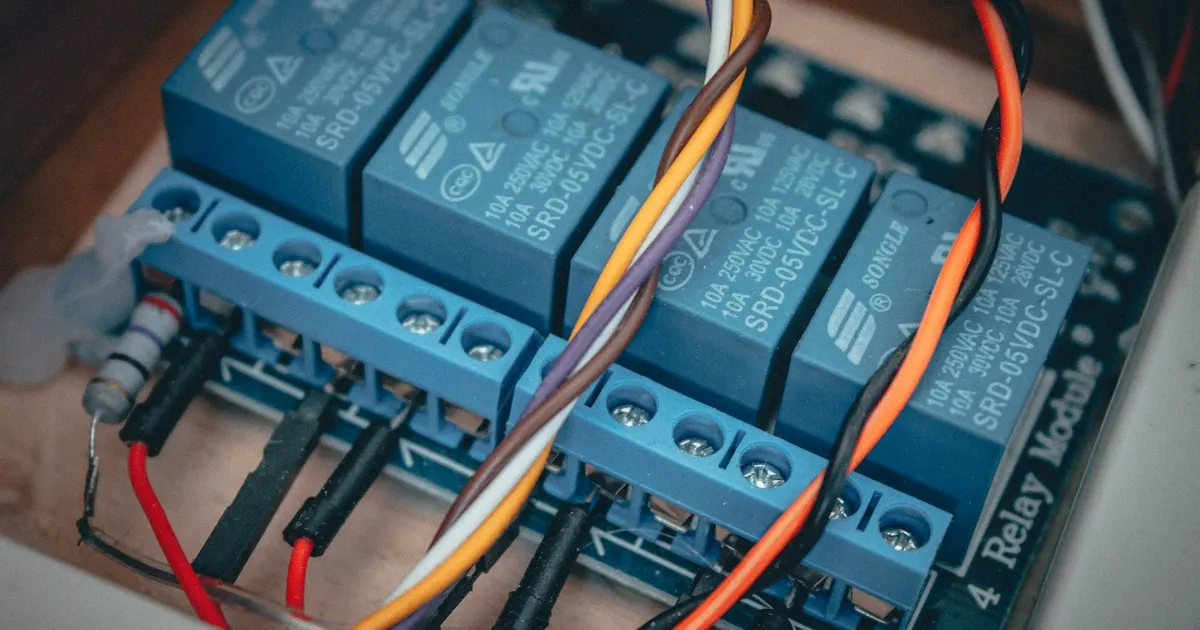
A furnace control board replacement typically costs $300 to $700 installed, with a $500 national average, and the board alone is about $50 to $300 (Angi). Before you pay for one, make sure the board is really the fault: a board that is dark because no power reaches it, a blown low-voltage fuse, or a flashing code that points at another part can all look like a dead board.
Quick answer (checked November 4, 2026)
- Typical price: $300 to $700 installed, $500 national average (Angi); HomeGuide reports $150 at the low end and $900 at the high end (HomeGuide).
- The split: $50 to $300 for the board, $150 to $450 for labor (Angi).
- Proof it is the board: Carrier's service chart says to replace the control only if it flashes its own replace-control code (code 45 on that board) or every other check is OK (Carrier).
- Rule out first: the switch, breaker and blower door switch, the board's low-voltage fuse, the thermostat, and whatever part a flashing code names.
Control Board Replacement Cost at a Glance
Installed prices from four published cost sources, read November 4, 2026. Each bar shows the range on a $0 to $1,000 scale.
- Angi, typical installed range$300 - $700 (Angi)
- HomeGuide, average installed range$300 - $650 (HomeGuide)
- HomeGuide, lowest to highest reported$150 - $900 (HomeGuide)
- Homewyse, new OEM board installed$517 - $655 (Homewyse)
- HomeAdvisor figure, as published by Carrier$200 - $600 (Carrier)
National market ranges from Angi, HomeGuide, Homewyse and the HomeAdvisor figures Carrier publishes. None is a Dimatic Control quote.
What You Pay For: Board, Labor and Service Call
Angi and HomeGuide agree on the board and split differently on labor. Both, side by side:
| Item | Angi | HomeGuide |
|---|---|---|
| The board itself | $50 - $300 | $50 - $300 |
| Labor to replace it | $150 - $450 total ($50 - $150 an hour) | $250 - $350 ($75 - $150 an hour) |
| Inspection or diagnosis | $80 - $100 | $70 - $130 |
| Minimum service fee | Not listed | $75 - $200, includes the first hour |
| After-hours or emergency rate | $90 - $230 an hour | $140 - $210 an hour |
Sources: Angi (updated September 23, 2026) and HomeGuide (September 5, 2023).
What Moves the Price Up or Down
- Universal or original part. Universal boards cost less and fit many brands; original manufacturer (OEM) boards cost more and are made for your furnace (Angi). Homewyse's $517 to $655 estimate assumes a new original-equipment board (Homewyse).
- Type of board. A simple ignition control in an older, less efficient furnace costs less than an integrated furnace control that runs more of the system (HomeGuide).
- Type of furnace. Parts and labor for high-efficiency, two-stage furnaces cost more than for single-stage models (HomeGuide).
- When it breaks. Emergency service runs $90 to $230 an hour (Angi) or $140 to $210 an hour outside regular hours (HomeGuide).
- Where the furnace sits. Hard-to-reach furnaces add labor time, and metropolitan rates run higher than rural ones (HomeGuide).
Signs Your Furnace Control Board Is Bad
The board powers and regulates the furnace's heating functions and relays your thermostat settings to the furnace (HomeGuide). HomeGuide's warning signs:
- The house is too hot or too cold while the thermostat works.
- The blower motor stops suddenly and often.
- Warning lights flash on the control board.
- The furnace smells of burnt plastic.
- There are burn marks on the board.
None of these alone proves the board is bad. A flashing light is the board doing its job: reporting a fault, often in another part. Angi's advice is to write the code down and, if you smell burning, shut the furnace off (Angi).
How a Technician Proves It Is the Board
If the board has a status light, HomeGuide's test steps read its flashes against the chart on the inside of the panel lid; if it has none, a voltage meter is needed (HomeGuide). Carrier's service guide for its 2-stage furnaces shows how to read the light. Your furnace's own chart has the final word, but the logic carries over:
| What the light does | What it means | What to check |
|---|---|---|
| Status light off, steady | The board is not getting power: not proof of a bad board | Check for 115 volts at the board's line terminals and 24 volts at its transformer terminals (Carrier), plus the furnace switch, breaker and the blower door switch. |
| Status light on, steady | The board has 24-volt power | Carrier's guide reads a steady light as the control having power; look elsewhere for the fault or wait for a code. |
| Rapid flashing with no pause | Line voltage polarity is reversed | A wiring fix at the supply, not a new board (Carrier). |
| Code 24 on Carrier boards | The low-voltage fuse on the board is open | Find the short in the 24-volt wiring, then replace the fuse with the same rating; on the Carrier furnaces that guide covers it is a 3-amp automotive blade fuse. |
| Any other flashing code | The board is reporting a fault somewhere else | Read the chart on the furnace door; codes point at pressure switches, limits, ignition or flame sensing. Carrier's chart says to replace the control only if all checks are OK. |
| Code 45 on Carrier boards | Replace the control | Carrier: the board found a failure in its flame sense circuit, or its main gas valve relay failed to close. |
From Carrier Form 58-3T, a manufacturer troubleshooting guide; codes differ by brand and model.
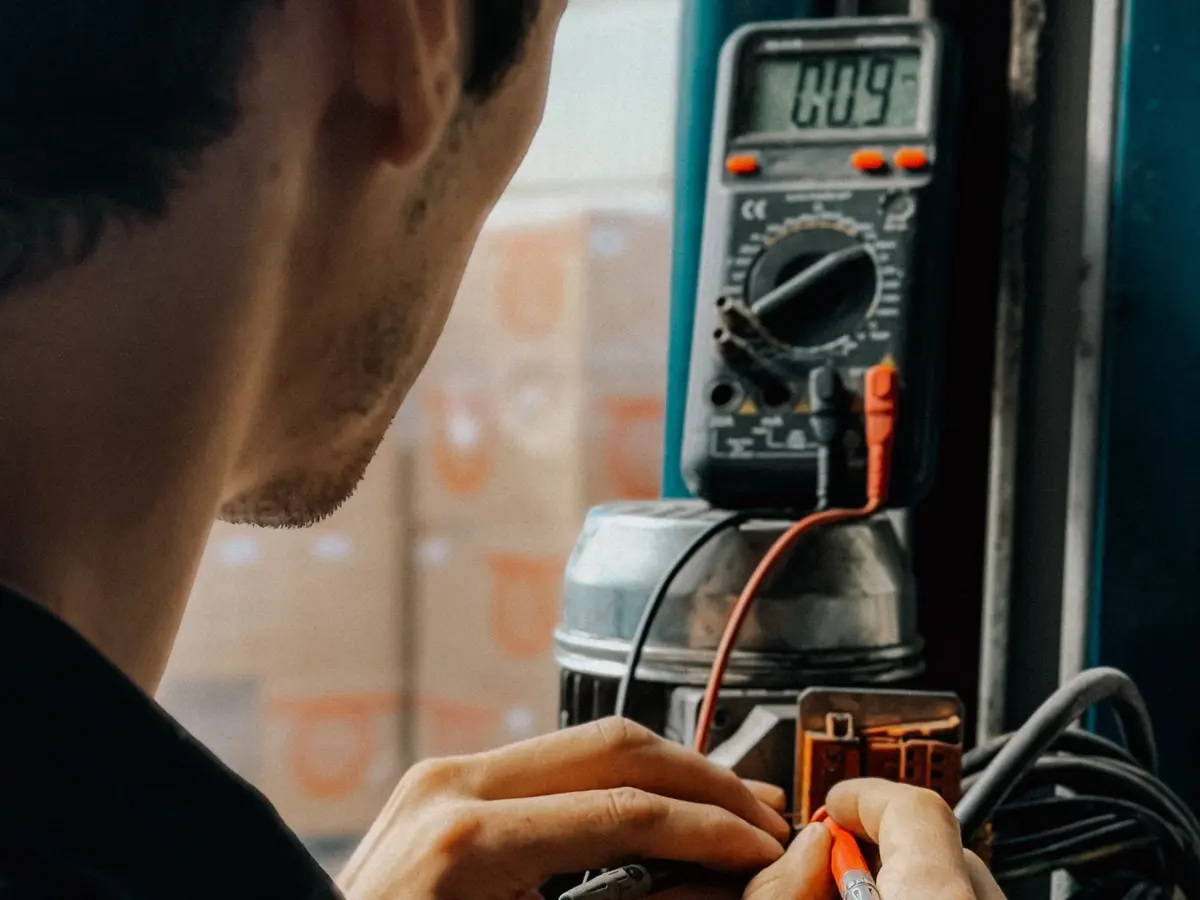
Two details save money. First, HomeGuide reads a dark light as no power reaching the board, an electrical problem rather than the board (HomeGuide), and Carrier's first check for a dark light is the 115-volt and 24-volt supply (Carrier). Second, the board may carry its own low-voltage fuse; on the Carrier furnaces in that guide it is a 3-amp automotive blade fuse, and Carrier says to replace it only with a 3-amp fuse and to find the short that blew it (Carrier).
Also: stored codes on that Carrier board are erased when the power is cut (Carrier), so if you can, note the flashes before anyone switches the furnace off.
Cheaper Faults That Look Like a Bad Board
- No power to the furnace. A switched-off furnace, a tripped breaker, or a loose blower door: on Carrier's furnaces the blower door must be in place for power to reach the control (Carrier).
- Reversed polarity. Rapid flashing on the Carrier board means the 115-volt supply is wired backward (Carrier).
- A blown low-voltage fuse. A short in the 24-volt wiring opens the board's fuse (code 24 on that Carrier board).
- The thermostat. If it is not calling for heat, the board has nothing to do. Our thermostat not working guide covers the checks.
- The part the code names. Carrier's codes point at pressure switches, limit and rollout switches, ignition and the flame sensor (Carrier). Those parts have their own prices: the flame sensor runs $75 to $250 and the ignitor $150 to $300 in Carrier's published figures (Carrier). See our flame sensor guide and inducer motor cost guide.
Why Furnace Control Boards Fail
Angi names a power surge as one of the most common triggers of sudden failure, and lists age, loose wires, a transistor worn out by heat, and water (Angi). HomeGuide adds dust buildup, condensation, clogged filters, blower motor failure, stuck relays, a faulty capacitor, mismatched fuses and corrosion (HomeGuide).
That list matters when you approve the repair: if the old board burned out because of a shorted wire, a failing blower motor or a wet cabinet, a new board can fail the same way. Ask what caused it.
Is a $1,000+ Quote Reasonable?
The highest installed figure in the four sources above is HomeGuide's $900 maximum (HomeGuide). A quote well above that is not automatically wrong, but it should come with reasons you can check: an integrated or two-stage furnace control, an original part ordered for your model, an after-hours rate, or extra repairs bundled in.
Angi suggests comparing quotes from at least three companies (Angi). Use the questions below with each one.
Seven Questions to Ask Before You Approve the Quote
- What did the status light show, and did you confirm power and the low-voltage fuse before blaming the board?
- Is the board an original (OEM) part for my furnace's model number, or a universal replacement?
- What do you think damaged the old board, and did you fix that?
- Is the price split into board, labor and service call, and is this an after-hours rate?
- Is my furnace still under its parts warranty? Angi says furnaces typically carry a limited 5-year parts warranty, or 10 years if registered (Angi).
- Will you run the furnace through a full heating cycle after the swap?
- What is your New Jersey HVACR license number? (State rules require it on invoices, websites and ads, N.J.A.C. 13:32A-5.1, NJ HVACR Board.)
Replace the Board or Replace the Furnace?
Carrier's published figures put a control board at $200 to $600 and a new gas furnace at $3,800 to $10,000 (Carrier). Carrier says a new furnace can be expected to last fifteen to thirty years, and that at 15 years old or more it may be time to look seriously at replacement. On a younger furnace, a $200 to $600 board is a small share of a new furnace's price. On an old furnace with a run of repairs, price both before you decide.
Our furnace replacement cost guide for NJ covers what a new system costs here.
Can You Replace a Furnace Control Board Yourself?
The swap itself takes 20 to 30 minutes (HomeGuide), and a knowledgeable DIYer might spend only the $50 to $300 for the board. Angi still advises against it: the work involves high-voltage parts, miswiring risks a shock, boards may need different settings, and you may find the board was never the problem; Angi adds that a bad repair can release carbon monoxide and that DIY work can void the furnace's warranty (Angi). Carrier's chart carries an electrical shock warning that only qualified, trained service personnel should do the procedure (Carrier).
In New Jersey, anyone performing HVACR services who does not qualify for an exemption must be licensed by the state board (N.J.S.A. 45:16A-7), and towns do not issue Master HVACR licenses (N.J.S.A. 45:16A-6) (NJ HVACR Board).
Safety first: the board controls your gas valve. Keep working CO alarms on every level and outside sleeping areas, and if you suspect carbon monoxide poisoning (headache, dizziness, nausea or confusion), get outside to fresh air and call 911 (CPSC). Our furnace carbon monoxide safety guide has more.
Furnace Board Trouble in Union County
Dimatic Control's gas furnace repair team works on ignition problems, gas valves and the furnace's safety controls across Union County. When you call, tell us the furnace brand and model, what it does when the thermostat calls for heat, and the pattern the status light is flashing. Those details help a technician check power, the fuse and the code before a board is priced.
Furnace Dead, or Flashing a Code You Can't Read?
Dimatic Control provides gas furnace repair across Union County. Call or send a quote request and tell us what the furnace is doing.
Furnace Control Board Replacement: Frequently Asked Questions
How much does it cost to replace a furnace control board?
Angi puts a furnace control board replacement at $300 to $700 for the board and professional installation, with a $500 national average. HomeGuide's average range is $300 to $650, with a $450 national average, $150 lowest and $900 highest reported. The board alone (also called the circuit board or motherboard) is $50 to $300 in both. These are national figures read November 4, 2026, not a Dimatic Control quote.
How do I know if my furnace control board is bad?
HomeGuide lists the warning signs: the house is too hot or cold while the thermostat works, the blower stops suddenly and often, warning lights flash on the board, a burnt plastic smell, or burn marks on the board. A flashing code often names another part, and HomeGuide reads a dark status light as no power reaching the board. Carrier's service chart says to replace the control only if the board shows its replace-control code or every other check is OK.
Is it worth replacing a control board on a furnace?
It depends mostly on the furnace's age. Carrier's published figures put a control board at $200 to $600 against $3,800 to $10,000 for a new gas furnace, and Carrier says that once a furnace is 15 years old or more it may be time to look more seriously at replacement. On an older furnace with a history of repairs, price both before you decide.
How long does it take to replace a furnace control board?
HomeGuide puts the swap at 20 to 30 minutes, and up to an hour when the technician runs more diagnostic tests. The wires have to go back on the right terminals and the furnace should be run through at least one full heating cycle afterward, as Carrier's start-up steps describe.
How long does a furnace control board last?
The sources differ: HomeGuide says 10 to 15 years on average, and Angi says about 15 to 20 years, the typical life of a furnace. Angi notes that a power surge can end one early.
What is the most expensive part to replace in a furnace?
In the HomeAdvisor list Carrier publishes, the heat exchanger ($500 to $1,500), the blower motor ($400 to $1,500) and the draft inducer motor ($200 to $1,500) share the highest top-end price. The electronic control or circuit board is $200 to $600 and a gas valve $200 to $1,000.
Can I replace a furnace control board myself?
Angi says a knowledgeable DIYer might spend only $50 to $300 on the board, but lists the risks: high-voltage parts, shock from miswiring, boards that need different settings, and replacing a board that was never the problem. Carrier's chart carries an electrical shock warning that only qualified, trained service personnel should do the procedure. In New Jersey, anyone performing HVACR services without an exemption must be licensed (N.J.S.A. 45:16A-7).
How much does it cost to replace an entire furnace?
Carrier publishes HomeAdvisor's average of $3,800 to $10,000 for a gas furnace, including labor starting at $1,600, based on an 80,000 BTU furnace in a 1,600 to 2,000 square foot home. Our NJ furnace replacement cost guide covers the local side.
Sources
Every figure on this page was read from the sources below on November 4, 2026. Prices are national market figures, not a Dimatic Control quote.
- Angi, furnace control board replacement cost (Scott Dylan Westerlund, updated September 23, 2026; the cost page Google's AI answer cites for this search): $500 national average, $300-$700 for the board and professional installation; board $50-$300; labor $150-$450 in total, or $50-$150 an hour; inspection $80-$100; maintenance $120-$500 a year; emergency service $90-$230 an hour; a power surge is one of the most common triggers of sudden failure; boards can fail from age, loose wires, a transistor worn by heat, or getting wet; a board should last about 15 to 20 years; furnaces typically carry a limited 5-year parts warranty, or 10 years if registered; universal boards cost less than manufacturer parts.
- HomeGuide, furnace control board replacement cost (Sarah Noel, September 5, 2023, edited by Tom Grupa): $300-$650 average, $450 national average, $150 minimum and $900 maximum; board (also called the circuit board or motherboard) $50-$300; labor $250-$350; contractors $75-$150 an hour; minimum service fees $75-$200 including the first hour; emergency service $140-$210 an hour; inspection $70-$130; the swap takes 20 to 30 minutes, up to an hour with extra diagnostic tests; a board lasts 10 to 15 years; warning signs, test steps and failure causes; simple ignition controls cost less than integrated furnace controls; parts and labor for high-efficiency two-stage furnaces cost more; most furnaces carry a 5- to 10-year parts warranty.
- Homewyse, cost to repair an HVAC controller (January 2026 estimate): $517-$655 per board for a new original-equipment board, basic labor to troubleshoot, replace and cycle-test it, and job supplies, in readily serviceable conditions.
- Carrier, furnace replacement cost vs. furnace repair cost (figures attributed to HomeAdvisor): Electronic control/circuit board $200-$600; flame sensor $75-$250; ignitor $150-$300; gas valve $200-$1,000; draft inducer motor $200-$1,500; blower motor $400-$1,500; heat exchanger $500-$1,500; average furnace repair about $300; a gas furnace replacement $3,800-$10,000; a new furnace can be expected to last fifteen to thirty years; at 15 years old or more it may be time to look more seriously at replacement.
- Carrier, troubleshooting guide for 2-stage induced-combustion furnaces, Form 58-3T (1999): Status light continuously off: check for 115 VAC at L1 and L2 and 24 VAC at SEC1 and SEC2. Continuously on: the control has 24 VAC power. Rapid flashing: line voltage polarity reversed. Code 24: secondary voltage fuse is open, check for a short in the 24 VAC wiring. Fuse FU1 is a 3-amp automotive blade type; replace only with a 3-amp fuse. Code 45: replace control, because it has detected a failure in the flame sense circuitry or the main gas valve relay failed to close. Its troubleshooting chart: replace the control only if Code 45 is displayed, or if all checks are OK. Stored codes are erased when power is interrupted. Electrical shock hazard: only qualified and trained service personnel should perform the procedure.
- NJ State Board of Examiners of HVACR Contractors, FAQ: N.J.S.A. 45:16A-7: anyone performing HVACR services who does not qualify for an exemption must be licensed by the board; N.J.S.A. 45:16A-6: towns do not issue Master HVACR licenses; N.J.A.C. 13:32A-5.1: the NJ license number must appear on invoices, websites and advertising.
- U.S. Consumer Product Safety Commission, carbon monoxide information: CO alarms on every level of the home and outside sleeping areas; symptoms include headache, dizziness, weakness, nausea, vomiting, sleepiness and confusion; if you suspect CO poisoning, get outside to fresh air and call 911.