Walk-In Cooler Installation Cost in 2026: Cooler and Freezer Prices, Extras and NJ Rules
A walk-in cooler usually costs $7,000 to $25,000 installed, depending on size, system and installation (Touchstone Refrigeration, 2026). A Long Island installer prices a complete install at $100 to $150 per square foot (Temperature Control Systems, 2026). A walk-in freezer of the same size costs 20% to 40% more. In New Jersey, plan for a construction permit and, for a food business, a health-department plan review.
Quick answer (checked November 16, 2026)
- Cooler, installed: $7,000 to $25,000 for most jobs (Touchstone); $8,000 to $13,000 for an 8' x 10' (Temperature Control Systems).
- Freezer, installed: $9,000 to $35,000, most small and mid-size units $14,000 to $24,000 (Touchstone).
- Equipment only: box-only walk-ins from $2,903, with refrigeration from $6,692 (Atlantic).
- Often extra: a concrete pad, a drain, a dedicated circuit or service upgrade, and permits.
- In New Jersey: a construction permit, health plan review for food businesses, and a state-licensed HVACR contractor.
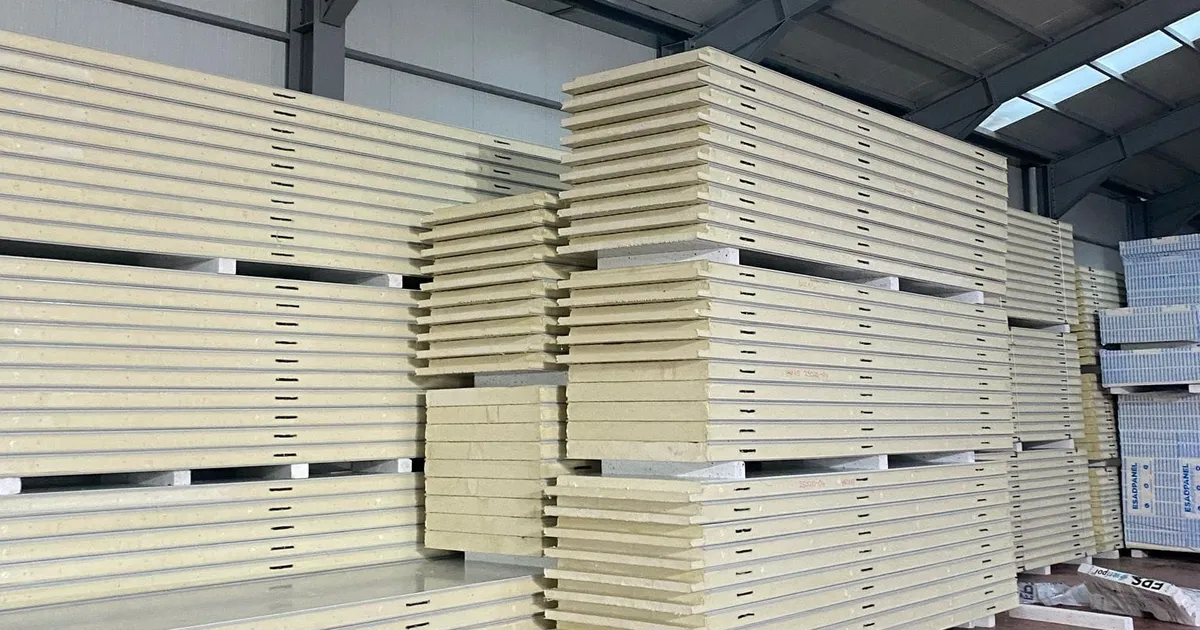
Walk-In Cooler and Freezer Cost at a Glance
Published project ranges by size from two installers, read November 16, 2026. Each bar shows the range on a $0 to $50,000 scale.
- 6' x 6' cooler, total project$5,000 - $10,000 (TCS)
- 8' x 10' cooler, total project$8,000 - $13,000 (TCS)
- 10' x 10' cooler, total project$9,500 - $16,000 (TCS)
- 12' x 20' cooler, total project$18,000 - $27,000 (TCS)
- 8' x 8' freezer, installed$12,000 - $18,500 (Touchstone)
- 10' x 10' freezer, installed$16,000 - $24,000 (Touchstone)
- 12' x 20' freezer, installed$30,000 - $45,000+ (Touchstone)
Cooler totals from Temperature Control Systems (Ronkonkoma, NY, October 2026); freezer prices from Touchstone Refrigeration (Utah, July 2026). None is a Dimatic Control quote.
Walk-In Cooler Cost by Size: Unit, Labor and Total
Temperature Control Systems splits each size into the unit and the installation labor. Its rule of thumb is $100 to $150 per square foot for a complete installation.
| Size | Unit | Labor | Total |
|---|---|---|---|
| 6' x 6' | $3,000 - $6,000 | $2,000 - $4,000 | $5,000 - $10,000 |
| 8' x 10' | $5,000 - $8,000 | $3,000 - $5,000 | $8,000 - $13,000 |
| 10' x 10' | $6,000 - $10,000 | $3,500 - $6,000 | $9,500 - $16,000 |
| 12' x 20' | $12,000 - $18,000 | $6,000 - $9,000 | $18,000 - $27,000 |
Source: Temperature Control Systems, Walk-In Cooler Installation Cost in 2026 (updated October 20, 2026).
Touchstone groups coolers more broadly: $4,000 to $8,000 for small boxes (6x6 to 8x8), $7,000 to $15,000 for medium (8x10 to 10x12), and $15,000 to $35,000+ for large (12x16 and up). It lists typical installation separately at $5,000 to $10,000+ (Touchstone).
Walk-In Freezer Cost by Size
Freezers need thicker insulation and stronger refrigeration. Touchstone expects a freezer to run 25% to 40% more than a cooler of the same footprint. Its installed prices:
| Freezer size | Installed range |
|---|---|
| 6' x 6' (36 sq ft) | $9,000 - $14,000 |
| 6' x 8' (48 sq ft) | $10,500 - $16,000 |
| 8' x 8' (64 sq ft) | $12,000 - $18,500 |
| 8' x 10' (80 sq ft) | $14,000 - $21,000 |
| 10' x 10' (100 sq ft) | $16,000 - $24,000 |
| 10' x 12' (120 sq ft) | $18,500 - $27,000 |
| 12' x 14' (168 sq ft) | $23,000 - $34,000 |
| 12' x 20' (240 sq ft) | $30,000 - $45,000+ |
Source: Touchstone Refrigeration, 2026 walk-in freezer price guide (July 28, 2026).
What the Equipment Alone Costs
Retail prices show what the box costs before anyone installs it:
- Box only: from $2,903 at Atlantic Restaurant & Supermarket Equipment (Atlantic).
- Box with refrigeration: from $6,692 at the same seller (Atlantic).
- A complete small cooler: $12,808 for a Norlake Kold Locker 6' x 8' x 7' 7" with an aluminum floor and a self-contained, top-mounted unit (WebstaurantStore).
- Remote or self-contained: one maker's 8x10 remote freezer system was $4,752, against $7,487 for its self-contained equivalent (Touchstone).
That Norlake listing ships by common carrier and needs a dock or forklift to unload. It may not fit through a standard 80-inch doorway standing upright (WebstaurantStore). Measure the path in before you order.
Where the Money Goes: Panels, Door, Refrigeration and Labor
Temperature Control Systems breaks the material cost down this way (TCS):
- Insulated panels: 60% to 70% of material cost.
- Door assembly: 20% to 30%.
- Refrigeration system: 10% to 20%.
- Labor: usually 10% to 20% of the total project, and past 30% on complex jobs.
Touchstone puts professional installation labor at $2,500 to $7,500 in 2026 (Touchstone).
Costs a Box Price Leaves Out
- Floor and slab. A new concrete pad can cost $1,000 to $3,000 (TCS). Floorless boxes sit on an existing slab; freezers need floor insulation of at least R-28 under federal rules (10 CFR 431.306).
- Drain. Drain plumbing can add $500 to $1,500 (TCS). Some self-contained units use an electric vaporizer instead of a drain line (WebstaurantStore).
- Electrical. A walk-in needs its own dedicated circuit. TCS gives the example of a $4,000 electrical service upgrade to handle the load (TCS). Touchstone says panel upgrades or subpanels are measured in thousands rather than hundreds (Touchstone).
- Permits. Permit fees might run $200 to over $500 (TCS). In New Jersey, each town sets its own fee schedule (NJ DCA).
- Delivery and rigging. Some boxes need a dock or forklift to unload (WebstaurantStore), and the panels still have to travel through the building.
- Outdoor installs. An outdoor box needs weatherproofing (Touchstone), and a remote condenser outside or on the roof costs more to install (TCS).
What Moves the Price Up or Down
- Size. Larger boxes need more panels and more refrigeration capacity (Touchstone).
- Cooler or freezer. A freezer costs 20% to 40% more for the same size (Touchstone).
- Self-contained or remote. Self-contained units cost less to install; remote systems are quieter but cost more (Touchstone).
- Floor. An insulated floor adds material and labor (Touchstone); a floorless box needs a level, sound slab.
- Glass doors. Freezer reach-in glass doors must be triple-pane under federal rules (10 CFR 431.306).
- Site conditions. TCS says difficult sites can easily double the labor time of a straightforward setup (TCS).
Federal Rules Every New Walk-In Must Meet
A walk-in, in federal terms, is a box you can walk into with less than 3,000 square feet of chilled storage (10 CFR 431.302). Every walk-in made since January 1, 2009 must have (10 CFR 431.306):
- Automatic door closers, except on doors wider than 3 feet 9 inches or taller than 7 feet.
- Strip doors, spring-hinged doors or another way to limit air loss.
- Wall, ceiling and door insulation of at least R-25 for coolers and R-32 for freezers.
- Floor insulation of at least R-28 for freezers.
- Electronically commutated or 3-phase evaporator fan motors under 1 horsepower.
- Interior lights of at least 40 lumens per watt, or a shutoff within 15 minutes when nobody is inside.
These rules shape the price floor. When two quotes differ widely, ask each installer to confirm the panels, doors and refrigeration system meet them.
Refrigerant Rules in 2026
EPA limits the refrigerants allowed in new remote condensing units for retail food refrigeration (EPA):
- From July 27, 2026: global warming potential (GWP) below 1,400.
- From January 1, 2032: below 150 for systems with 200 pounds of refrigerant or more, and below 300 for smaller systems.
EPA notes that R-448A and R-449A are used in new remote condensing units and fall below the 1,400 limit (Federal Register, May 26, 2026). The self-contained Norlake unit above uses R-290 (WebstaurantStore). Ask which refrigerant your quote uses and which rule it meets.
New Jersey: Permits, Health Review and Licensing
- Construction permit. New Jersey's Uniform Construction Code requires a permit for new construction and for structural, plumbing, mechanical and electrical work on existing buildings. Ordinary maintenance is exempt. Your local enforcing agency must release or deny a complete application within 20 business days (NJ DCA).
- Health-department plan review. A food business submits plans before building, converting or remodeling when the health authority requires them. Plans list equipment types, model numbers and locations, and the health authority responds within 30 days (N.J.A.C. 8:24-9.1).
- The 41°F target. New Jersey's food code defines refrigeration temperatures as 41°F or less (N.J.A.C. 8:24). Size the refrigeration to hold that on the hottest day.
- Licensed contractor. Anyone performing HVACR work without an exemption must hold a state license (N.J.S.A. 45:16A-7), and towns do not issue Master HVACR licenses (N.J.S.A. 45:16A-6). The license number must appear on invoices, websites and advertising (NJ HVACR Board).
PSE&G Incentives for Walk-In Equipment (2026)
PSE&G's 2026 business energy efficiency program lists these walk-in measures (PSE&G):
- EC motors for evaporator fans: $200 per motor.
- Automatic door closer: $150 per door, for walk-in doors with a perimeter of 16 feet or more.
- Evaporator fan motor control: $200 per motor.
- Floating head pressure controls: $200 per ton.
- Variable speed refrigeration compressor: $2,000 per compressor.
- Door gaskets: $7 per linear foot; strip curtains: $12 per square foot.
PSE&G says actual rebates may vary with program rules. Some of these items are already federal requirements on new walk-ins, so confirm eligibility with PSE&G before you count a rebate in your budget.
What It Costs to Run After Installation
- Electricity, 8' x 8' cooler: $70 to $150 a month (Touchstone).
- Electricity, 8' x 8' freezer: $240 to $435 a month (Touchstone).
- Preventive maintenance: $300 to $600 a year (TCS). See our commercial maintenance agreements.
How a Walk-In Installation Usually Runs
- Measure the space, the doorway path and the electrical panel.
- Choose cooler or freezer, size, floor, and self-contained or remote refrigeration.
- For a food business, submit plans to the health authority when required (N.J.A.C. 8:24-9.1).
- Apply for the construction permit with the building, electrical and plumbing details (NJ DCA).
- Prepare the slab or set the insulated floor.
- Assemble the panels, set the door and seal the joints.
- Mount the refrigeration, run the line set for remote systems, and connect the dedicated circuit and drain.
- Start up, pull the box down to temperature, and confirm it holds 41°F or less for a cooler.
- Pass the required inspections before you load product.
Ten Questions to Ask Before You Sign
- Is the price split into box, refrigeration, labor and extras?
- Self-contained or remote, and why for my space?
- What refrigerant does the system use, and which EPA limit does it meet?
- Do the panels and doors meet R-25 (cooler) or R-32 (freezer)?
- Does the box have a floor, or does it sit on my slab?
- Is a new circuit or electrical service upgrade included?
- Who pulls the construction permit, and are fees included?
- Does the drain, or a vaporizer, come with the quote?
- How will the panels get through my doorways?
- What is your New Jersey HVACR license number? (NJ HVACR Board)
Buy, Rent or Repair?
Touchstone puts the break-even point with renting at 12 to 18 months of continuous rental (Touchstone). For seasonal or short-term needs, renting can make sense.
If your current walk-in is failing, a repair may cost far less than a new box. Our walk-in cooler not cooling guide covers the common faults, and our commercial refrigeration repair team can diagnose it.
Walk-In Installation in New Jersey with Dimatic Control
Dimatic Control installs, repairs and maintains walk-in refrigeration for New Jersey restaurants, grocery stores and food service businesses, from our office at 1992 Morris Ave in Union:
- Walk-in cooler installation with proper sizing, insulation, refrigeration and code compliance.
- Walk-in freezer installation, including blast freezers and specialty low-temperature systems.
- Walk-in box insulation upgrades, door replacements and retrofits.
- Repairs on Kolpak, Norlake, Master-Bilt, Amerikooler and Bally walk-ins, with 24/7 emergency walk-in cooler service.
When you call, tell us the size you want, cooler or freezer, indoor or outdoor, and what your electrical panel looks like. A photo of the space and the doorway helps. See all our commercial refrigeration services.
Planning a Walk-In Cooler or Freezer?
Dimatic Control provides walk-in cooler installation and repair across New Jersey. Call or send a quote request with your size and location.
Walk-In Cooler Installation Cost: Frequently Asked Questions
How much does it cost to install a walk-in cooler?
Touchstone Refrigeration puts most walk-in coolers at $7,000 to $25,000, depending on size, system and installation. Temperature Control Systems, a Long Island installer, uses $100 to $150 per square foot for a complete installation, or $8,000 to $13,000 for an 8' x 10' cooler. These are published 2026 figures read November 16, 2026, not a Dimatic Control quote.
How much to install a walk-in freezer?
Touchstone Refrigeration's 2026 freezer guide puts a walk-in freezer at $9,000 to $35,000 installed, with most small and mid-size units at $14,000 to $24,000. An 8' x 8' freezer is $12,000 to $18,500 in its size table. Installation labor alone runs $2,500 to $7,500 in 2026, by the same source.
How much does a walk-in fridge cost without installation?
Atlantic Restaurant & Supermarket Equipment lists box-only walk-ins from $2,903 and walk-ins with refrigeration from $6,692. WebstaurantStore lists a Norlake Kold Locker 6' x 8' cooler with a floor and a self-contained refrigeration unit at $12,808. Delivery, the electrical circuit, permits and labor are on top.
How tall should a walk-in cooler be?
Prefabricated boxes in the listings we read come in heights such as 6' 7" (Norlake boxes at Atlantic) and 7' 7" (Norlake Kold Locker at WebstaurantStore). Check the path in, too: WebstaurantStore warns that the 7' 7" Kold Locker may not fit through a standard 80-inch doorway standing upright. Federal door-closer rules do not apply to doors taller than 7 feet or wider than 3 feet 9 inches.
What is the cheapest way to build a walk-in cooler?
Keep to a standard size, set a floorless box on a sound existing slab indoors, and use a self-contained refrigeration unit. Touchstone says self-contained systems cost less to install than remote systems, and Temperature Control Systems says a remote system costs more to install. Whatever you build still has to meet the federal insulation and door rules in 10 CFR 431.306.
Is a walk-in freezer worth it?
Compare it with renting and with running costs. Touchstone puts the break-even point with renting at 12 to 18 months of continuous rental, and estimates $240 to $435 a month to run an 8' x 8' freezer against $70 to $150 for a cooler. On those numbers, buying wins once you need the space continuously for longer than 12 to 18 months.
Can you put a walk-in fridge in a house?
Physically, yes: the smallest self-contained boxes run on 115 volts, like the Norlake Kold Locker 6' x 8' (1/2 hp, 115V). The practical limits are the doorway, the floor, a dedicated circuit and heat from the condensing unit. Dimatic Control's walk-in work is for restaurants, grocery stores and food service businesses.
Do I need a permit to install a walk-in cooler in New Jersey?
Plan on it. Under the Uniform Construction Code, a construction permit is required for new construction and for structural, plumbing, mechanical and electrical work on existing buildings, and your town sets the fees. A food business may also need health-department plan approval before building or remodeling (N.J.A.C. 8:24-9.1). Ask your local construction office what your project needs.
Sources
Every figure on this page was read from the sources below on November 16, 2026. Prices are published market figures, not a Dimatic Control quote.
- Touchstone Refrigeration (Utah), How Much Is a Walk-In Cooler? (published March 16, 2026, updated March 18, 2026): Walk-in coolers usually cost $7,000 to $25,000 depending on size, system and installation; small (6x6 to 8x8) $4,000 to $8,000, medium (8x10 to 10x12) $7,000 to $15,000, large (12x16 and up) $15,000 to $35,000+; typical installation $5,000 to $10,000+; large systems may exceed $25,000 to $50,000+; freezers often cost 20% to 40% more than coolers of the same size; self-contained systems have a lower installation cost, remote systems are quieter but more expensive.
- Touchstone Refrigeration (Utah), How Much Does a Walk-In Freezer Cost? 2026 Price Guide (published July 28, 2026): A walk-in freezer costs $9,000 to $35,000 installed, most small and mid-size units $14,000 to $24,000; installed ranges by size from 6x6 ($9,000 to $14,000) to 12x20 ($30,000 to $45,000+); installation labor $2,500 to $7,500 in 2026; a freezer runs 25% to 40% more than a cooler of the same footprint; one maker's 8x10 remote system $4,752 against $7,487 for the self-contained equivalent; electrical panel upgrades or subpanels are measured in thousands rather than hundreds; monthly running cost for an 8x8 is $70 to $150 for a cooler and $240 to $435 for a freezer; renting breaks even with buying after 12 to 18 months of continuous rental.
- Temperature Control Systems (Ronkonkoma, NY), Walk-In Cooler Installation Cost in 2026 (published October 19, 2026, updated October 20, 2026): $100 to $150 per square foot for a complete installation; unit, labor and total project cost by size (6x6, 8x10, 10x10, 12x20); insulated panels 60% to 70%, door assembly 20% to 30% and refrigeration system 10% to 20% of material cost; labor usually 10% to 20% of the total and past 30% on complex jobs; concrete pad $1,000 to $3,000; drain plumbing $500 to $1,500; example of a $4,000 electrical service upgrade; permit fees $200 to over $500; a dedicated electrical circuit is required; preventive maintenance $300 to $600 a year.
- Atlantic Restaurant & Supermarket Equipment, walk-in coolers collection (read November 16, 2026): Box-only models start at $2,903, and walk-ins with refrigeration start at $6,692; 4-inch foam-in-place polyurethane panels.
- WebstaurantStore, Norlake KLB7768-C Kold Locker 6' x 8' x 7' 7" indoor walk-in cooler (read November 16, 2026): $12,808.00 each; self-contained, top-mounted Capsule Pak cooling unit using R-290 refrigerant, 1/2 hp, 115 volts, 35 to 38 degrees Fahrenheit; 4-inch polyurethane panels and an aluminum floor; an electric vaporizer removes the need for a drain line; ships by common carrier and may not fit through a standard 80-inch doorway standing upright.
- 10 CFR 431.306, federal energy conservation standards for walk-in coolers and freezers (eCFR, up to date as of November 12, 2026): Walk-ins made on or after January 1, 2009 need automatic door closers, strip doors or spring-hinged doors, R-25 wall, ceiling and door insulation for coolers and R-32 for freezers, R-28 floor insulation for freezers, electronically commutated or 3-phase evaporator fan motors under 1 horsepower, and interior lighting of at least 40 lumens per watt or a 15-minute shutoff; glass reach-in doors on freezers must be triple-pane.
- 10 CFR 431.302, definition of a walk-in cooler and walk-in freezer (eCFR): An enclosed storage space that can be walked into, refrigerated above 32°F (cooler) or at or below 32°F (freezer), with less than 3,000 square feet of chilled storage area.
- U.S. EPA, Technology Transitions HFC restrictions by sector (last updated August 28, 2026): Retail food remote condensing units: GWP limit of 1,400 from July 27, 2026, then 150 (200 pounds of charge or more) or 300 (less than 200 pounds) from January 1, 2032; codified at 40 CFR 84.54(c)(11).
- U.S. EPA final rule, Federal Register, May 26, 2026 (2026-10387): R-448A and R-449A are being used in new remote condensing unit installations and are below the 1,400 limit.
- NJ Department of Community Affairs, The New Jersey State Uniform Construction Code (general information): A construction permit is required for new construction and for work on existing buildings, including structural, plumbing, mechanical and electrical work; not for ordinary maintenance; municipalities set their own fees; local agencies must release or deny a complete application within 20 business days.
- N.J.A.C. 8:24-9.1, plan submission and approval (Cornell LII): Plans go to the health authority before a retail food establishment is built, converted or remodeled (when the health authority requires them), including equipment types, model numbers and locations; the health authority responds within 30 days.
- NJ Department of Health, Chapter 24 (N.J.A.C. 8:24), retail food establishments (effective January 3, 2022): Refrigeration temperatures mean 41°F or less.
- NJ State Board of Examiners of HVACR Contractors, FAQ: Anyone performing HVACR services who does not qualify for an exemption must be licensed by the board (N.J.S.A. 45:16A-7); towns do not issue Master HVACR licenses (N.J.S.A. 45:16A-6); the license number must appear on business correspondence, invoices, websites and advertising.
- PSE&G, 2026 Commercial & Industrial Programs, C&I Energy Efficiency Program incentive rates and requirements: Refrigeration: EC motors for evaporator fans $200 per motor; automatic door closer $150 per door (walk-in door perimeter of 16 feet or more); door gasket $7 per linear foot; strip curtains $12 per square foot; evaporator fan motor control $200 per motor; floating head pressure controls $200 per ton; variable speed refrigeration compressor $2,000 per compressor; actual rebates may vary.