Oil to Gas Conversion Cost in NJ (2026): Prices, Rebates and Payback for Union County Homes
Converting an oil-heated house in New Jersey to natural gas costs $8,000 to $18,000 in published New Jersey estimates, and the new gas furnace alone averages $6,000 to $12,000, according to PSE&G. Four things decide where your house lands: whether gas already runs to the street, whether you heat with a furnace or a boiler, what happens to the oil tank, and whether the chimney needs work. With New Jersey heating oil at $6.037 a gallon in early October 2026, a home that burns 500 gallons a year pays back a $12,000 conversion in about 5.5 to 9.6 years in the worked example below.
Quick answer (checked October 15, 2026)
- Total: $8,000 to $14,000 (Willco) or $12,000 to $18,000 with tank work (ERC Environmental). New gas furnace alone: $6,000 to $12,000 (PSE&G).
- Gas line: Elizabethtown Gas extends service free when the cost is no more than 10 times a year of the home's distribution revenue (tariff, Sheet 13).
- Rebates: Elizabethtown Gas pays $900 for a 95% gas furnace, $900 to $1,000 for a condensing boiler and $1,300 to $1,750 for a combi boiler, through June 30, 2027 (application).
- Fuel: heat from oil costs about 3.5 times as much as heat from gas at October 2026 prices: $6.037 a gallon (EIA) against $1.4577 a therm on Elizabethtown Gas.
- Tank: New Jersey code officials must see the oil tank removed or abandoned as part of a conversion (DCA Bulletin 95-1B).
- No federal credit: Section 25C ended for equipment placed in service after December 31, 2025 (IRS).
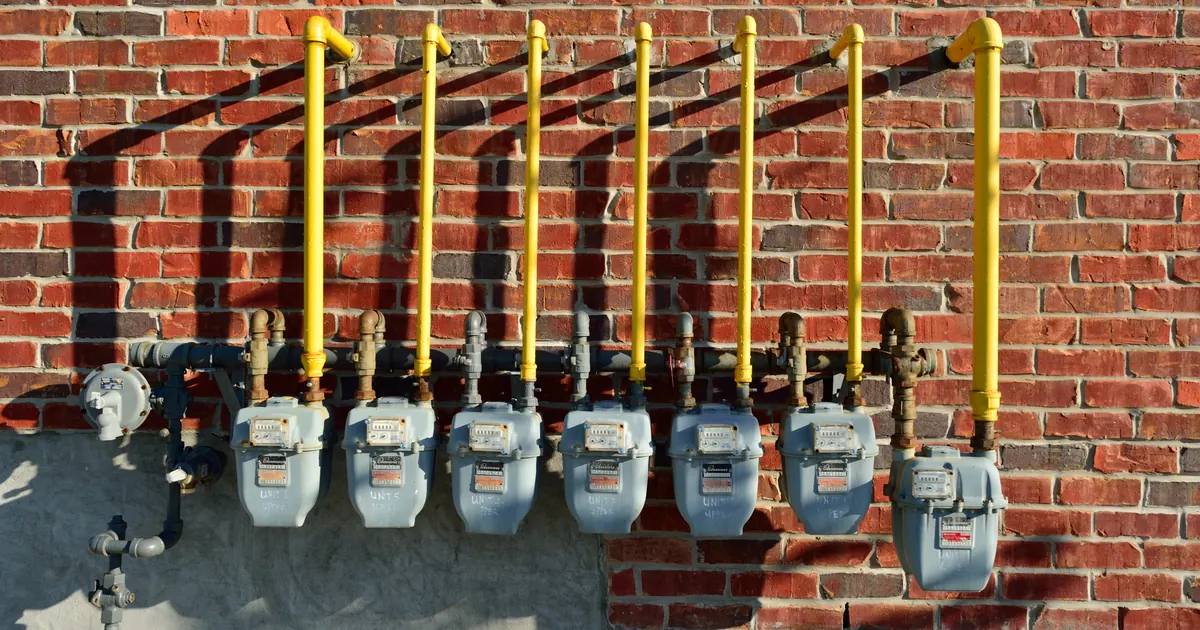
What an Oil to Gas Conversion Costs in New Jersey (2026)
Four published figures cover most of what New Jersey homeowners are quoted. They differ mainly in what they include, so read the right-hand column before comparing them with a quote:
| Source | Range | What it covers |
|---|---|---|
| PSE&G (NJ gas utility) | $6,000 - $12,000 | The new gas furnace only, listed as the average cost. |
| Willco (NJ heating contractor) | $8,000 - $14,000 | Most NJ conversions: furnace or boiler, venting or chimney liner, gas piping, thermostat, installation. $6,000 - $9,000 with gas service already in; $15,000+ with tank removal, long gas runs or venting work. |
| ERC Environmental (NJ oil tank firm) | $12,000 - $18,000 | A complete project including tank decommissioning. $8,000 - $12,000 when gas already runs on the street. |
| Viessmann (boiler maker) | $6,000 - $15,000 | A national ballpark to switch from an oil to a gas-fired system. |
These are other companies' published figures, read October 15, 2026. None of them is a Dimatic Control quote, and your price depends on your house. The federal tax credit some older guides still subtract ended after 2025.
Where the Money Goes, Line by Line
ERC Environmental's New Jersey breakdown is the most detailed published one. PSE&G lists the same parts: the gas line from the street, gas lines inside the home, a service upgrade if needed, permits, the furnace and any other gas appliances. What decides each line:
| Item | Published NJ range | What decides it |
|---|---|---|
| Gas furnace or boiler | $3,500 - $7,500 | Furnace for ducts, boiler for radiators or baseboard. Condensing models earn the utility rebate. |
| Gas piping inside the house | $500 - $1,500 | Distance from the meter to each appliance, and whether gas already feeds a stove or dryer. |
| Gas service from the street | $0 - $3,000+ | Your utility's extension rule (next section). |
| Permits | $150 - $600 | Your town's fee schedule. |
| Oil tank removal or abandonment | $1,000 - $3,500+ | Basement or buried tank, and soil testing if a leak turns up. |
| Water heater (if the oil boiler made your hot water) | $800 - $2,500 | Tank, tankless or an indirect tank on a new gas boiler. |
Two lines are missing from most quotes. A chimney liner is not priced in ERC's table, though Willco counts “venting or chimney liner” inside its range. And if you already use gas for a stove or dryer, the utility first checks whether your existing service can carry the new furnace; if not, PSE&G says it adds a main extension or a service upgrade and gives you a cost and schedule.
Gas at the Street: Who Pays for the Line
Elizabethtown Gas is the gas utility for most of Union County. Its tariff lists Clark, Cranford, Elizabeth, Fanwood, Garwood, Hillside, Kenilworth, Linden, Mountainside, Rahway, Roselle, Roselle Park, Scotch Plains, Union, Westfield, Winfield and Winfield Park (tariff, territory served). Its extension rule for a single home (Sheet 13, effective December 1, 2024):
- Free up to a limit. The company extends its mains and service to a home at no charge when the extension cost is no more than ten times the home's annual distribution revenue: the yearly gas bill minus the gas supply (BGSS) charge, as the company calculates it.
- A deposit above the limit. You pay the excess as a deposit. The deposit is waived when the excess is $500 or less, and the tariff refunds deposits under the state formula for up to ten years.
- The first 50 feet. Once it accepts an extension, the company may place up to 50 feet of normal residential facilities at no cost.
What that limit looks like: a home that burns 500 gallons of oil in an 80% system needs about 583 therms a year from a 95% gas furnace. At the rates in effect October 1, 2026, the non-supply part of that bill is about $656 a year including the $11.50 monthly service charge, so extension work up to roughly $6,560 would be covered. That is our arithmetic from the tariff, not a utility estimate. Ask Elizabethtown Gas for the real figure before you sign.
PSE&G runs its own process (conversion page):
- It estimates the cost of any street main and the service to your home once you email an application to its Energy Solutions Specialists (switchtogas@pseg.com).
- New service lines take four to six weeks, depending on permits and weather.
- You mark private lines before it digs, including a buried oil tank. It backfills; you restore the landscaping.
- It sets the meter only after the new equipment passes inspection, and it offers free safety and adjustment service on the new gas equipment afterwards.
Not sure which utility you have? Your gas bill names it. If you have no gas bill, a neighbor's will.
Furnace or Boiler: What You Are Actually Replacing
A conversion replaces the oil heater with a gas one. PSE&G's cost list starts with “your new natural gas furnace”, and the Elizabethtown Gas rebate pays only when a new condensing unit replaces a non-condensing one. Which gas unit you need depends on how the house is heated now:
- Vents and ducts: you have an oil furnace, and it becomes a gas furnace. Our furnace replacement cost guide covers furnace prices and efficiency choices in detail.
- Radiators or baseboard: you have an oil boiler, and it becomes a gas boiler. See our boiler installation service and the boiler vs. furnace guide.
- Hot water from the oil boiler: many oil homes heat water through the boiler, according to ERC Environmental. When the boiler goes, the water heating has to be replaced too: a gas water heater, a tankless unit, an indirect tank on the new boiler, or a combi boiler that does both.
Not ready to switch? We also keep oil systems running with oil furnace repair, and a heat pump is the other way off oil; our heat pump cost guide prices that route.
The Oil Tank: What New Jersey Requires
The Department of Community Affairs uses an oil-to-gas conversion as its own example in Bulletin 95-1B:
- Code officials “must ensure that the tank is properly removed or abandoned in connection with the conversion,” unless the owner can show a continued use for it.
- Removing or abandoning the tank needs a demolition permit, and the owner or contractor files a sketch of where the tank was.
- Buried tanks: only NJDEP-certified people and firms may work on them, and NJDEP strongly recommends removing out-of-service buried tanks even with no sign of a leak.
- Basement or other above-ground tanks out of service for a year must be removed under the fire code section the bulletin cites.
Ask whether your quote includes the tank or leaves it to a separate tank company. ERC Environmental puts tank work at $1,000 to $3,500 or more, and soil cleanup after a leak is a separate cost.
The Chimney: The Line Quotes Forget
New Jersey's chimney form, F370, has a box for “Oil to Gas Conversion”. For a conversion the contractor signs that the chimney is “in good repair and clear of obstruction,” is “substantially clean of residue from its previous use serving a liquid or solid fuel appliance,” and is “appropriately lined and sized for the appliance(s) being installed.”
A condensing gas furnace or boiler usually vents through plastic pipe out the side of the house. Then the form asks the contractor to verify the chimney is lined and sized for any remaining appliance, which in most houses is the water heater. Make sure the quote says which case applies and whether a liner is included.
Rebates, Financing and Tax in Union County (2026)
Elizabethtown Gas rebates (application form):
| Equipment | Rebate |
|---|---|
| Gas furnace, 95% AFUE or better | $900 |
| Gas boiler, 90% to 94.99% AFUE | $900 |
| Gas boiler, 95% AFUE or better | $1,000 |
| Combi boiler (heat + hot water), 95% AFUE or better | $1,300 |
| Combi boiler, 97% AFUE or better | $1,750 |
| Tankless water heater (UEF 0.87 / 0.95) | $500 / $750 |
| Power-vented tank water heater | $400 |
| Indirect water heater with a 90%+ gas boiler | $250 |
| Smart thermostat with an eligible install | $100 |
- $300 more per qualifying item for low- and moderate-income households (not thermostats or furnace fans).
- Dates: equipment bought and installed from January 1, 2025 through June 30, 2027; apply within 120 days of purchase with the paid invoice and the AHRI certificate.
- Your gas account must be active when the equipment is installed, and the rebate only applies when a non-condensing unit is replaced with a condensing one. The form lists oil as an existing fuel and asks whether the job is a conversion; confirm eligibility with the program (1-201-690-7896) before you count on it.
- One utility only: apply through your gas company or your electric company, not both.
0% financing. The Elizabethtown Gas On-Bill Repayment Program lends $2,500 to $25,000 at 0% APR, repaid on the gas bill over up to 7 years, or 10 for income-qualified customers. Every applicant must own the home and be on the deed, and the work must be done by an Elizabethtown Gas participating contractor. PSE&G's HVAC Instant Rebates Program also offers 0% on-bill repayment up to $25,000 over 84 months, with instant rebates through PSE&G participating contractors. Ask any contractor you are considering to confirm they are on the list for your utility.
Tax. No federal credit is left: the IRS says Section 25C is not allowed for property placed in service after December 31, 2025. No New Jersey sales tax is charged on the installation of a permanently installed central heating system when you give the contractor Form ST-8 (ANJ-8).
Oil vs. Gas: What You Save Each Year, and the Payback
Prices this week: New Jersey heating oil was $6.037 a gallon for the week of October 5, 2026, up about 59% from $3.808 a year earlier (EIA). Elizabethtown Gas heating customers on the utility's own gas supply pay $1.4577 a therm, taxes included, plus $11.50 a month from October 1, 2026 (rate summary, Sheet 133). Here is what the same heat costs on each fuel:
| Oil used a year | Oil now | Gas | You save | If oil is $4.299 |
|---|---|---|---|---|
| 500 gal | $3,018 | $988 | $2,030 | $1,161 |
| 750 gal | $4,528 | $1,413 | $3,115 | $1,811 |
| 1,000 gal | $6,037 | $1,838 | $4,199 | $2,461 |
How the table is built: oil at $6.037 a gallon burned at 80% efficiency; the same delivered heat from a 95% gas furnace at $1.4577 a therm, plus $138 a year of service charge. Heat content is EIA's: 138,500 Btu per gallon of oil, 100,000 per therm. The last column repeats the savings with oil at $4.299, the average of EIA's 26 weekly New Jersey prices from October 6, 2025 to March 30, 2026. If you already pay a gas service charge for a stove or dryer, add $138 to your savings. Your own efficiencies and usage will differ; your oil delivery receipts give your gallons.
Per unit of heat delivered, oil costs about $54.49 per million Btu and gas about $15.34 at these prices, so oil costs about 3.5 times as much. At last winter's average oil price it was about 2.5 times.
Payback = (your quote − rebates) ÷ yearly savings. Example: a $12,000 conversion with a $900 furnace rebate is $11,100. At 500 gallons a year that pays back in about 5.5 years at today's oil price ($2,030 a year), or 9.6 years if oil returns to last winter's average ($1,161 a year). Heavier oil users pay back faster.
The federal forecast points the same way. EIA's Winter Fuels Outlook expects oil-heated households to spend $2,115 this winter (October through March), 21% more than last winter, and Northeast households heating with natural gas to spend $879, down from $1,023. EIA adds a fair warning: the homes on each fuel differ, so you should not assume switching would necessarily lower your own bill by that much.
Is Converting from Oil to Gas Worth It?
It usually pays fastest when:
- Gas already runs on your street, so the extension is free or close to it.
- You burn a lot of oil: the savings grow with every gallon.
- The oil furnace or boiler is due for replacement anyway, so you are comparing gas with a new oil unit, not with keeping the old one.
- You qualify for the gas rebate and the 0% repayment plan.
Look harder when:
- The utility's estimate shows a large deposit for a main extension.
- Your oil system is newer and burns little oil.
- You are weighing a heat pump instead; our gas vs. electric heat comparison covers running costs.
How a Conversion Runs, Step by Step
- A licensed contractor assesses the house: heating system, water heating, tank, chimney and where the gas will enter.
- You or the contractor apply to the gas utility with the new equipment's gas load. The utility says what service is needed and what, if anything, you pay.
- Permits are filed with your town, including the demolition permit for the oil tank and the F370 chimney form.
- The utility installs the service line if one is needed (four to six weeks at PSE&G). The new equipment can go in before, during or after.
- The new furnace or boiler, piping and water heater go in.
- Inspections: your town and the utility. The utility sets the meter after the approved inspections.
- The oil tank is removed or abandoned under its permit.
- The rebate application goes in within 120 days of purchase.
Oil Heat in Union County, by the Numbers
New Jersey has 225,627 oil-heated homes, 4.5% of all oil-heated homes in the country against 2.7% of all U.S. households. In Union County, 81.8% of homes already heat with utility gas, so most oil homes here have gas nearby (Census, table B25040):
| Area | Oil-heated homes | Share of homes |
|---|---|---|
| New Jersey | 225,627 | 6.4% |
| Union County | 7,920 | 3.9% |
| Cranford | 671 | 7.1% |
| Summit | 518 | 6.2% |
| Union Township | 741 | 3.5% |
| Westfield | 387 | 3.6% |
| Scotch Plains | 251 | 2.9% |
American Community Survey 2020-2024 estimates of occupied homes by heating fuel. Dimatic Control is based in Union; more on heating in our home town on the Union heating page.
Get a Written Oil to Gas Conversion Estimate
Ask for each line on this page as its own price: equipment, gas piping, permits, the tank, the chimney and the water heater. Dimatic Control handles oil to gas conversions across Union County.
Oil to Gas Conversion Cost: Frequently Asked Questions
How much does it cost to convert from oil to gas in NJ?
Published New Jersey estimates put a complete oil-to-gas conversion at $8,000 to $18,000: $8,000 to $14,000 from Willco, a NJ heating contractor, and $12,000 to $18,000 from ERC Environmental, which includes oil tank work. PSE&G puts the new gas furnace alone at an average of $6,000 to $12,000. Gas already on the street, a boiler instead of a furnace, a buried tank and a chimney liner are what move a quote inside that range.
What is the NJ oil to gas conversion rebate amount?
Rebates come from your gas utility and pay by equipment type. Elizabethtown Gas, which serves Union, Elizabeth, Cranford, Westfield and most of Union County, pays $900 for a 95% AFUE gas furnace, $900 or $1,000 for a condensing gas boiler and $1,300 or $1,750 for a condensing combi boiler, plus $300 per item for income-qualified households, for equipment bought and installed from January 1, 2025 to June 30, 2027. The gas account must be active when the equipment is installed, and the application is due within 120 days of purchase. PSE&G customers get instant rebates through PSE&G participating contractors.
Is it worth converting from oil to gas?
For most oil homes with gas on the street, yes at today's prices. New Jersey heating oil was $6.037 a gallon in the week of October 5, 2026, against $1.4577 a therm for Elizabethtown Gas heating customers from October 1, 2026. A home burning 500 gallons a year in an 80% efficient oil system would pay about $988 a year for the same heat from a 95% gas furnace, including the monthly service charge, instead of about $3,018 for oil. That pays back a $12,000 conversion, less a $900 rebate, in about 5.5 years, or about 9.6 years if oil falls back to last winter's average of $4.299.
Is it cheaper to heat a home with gas or oil?
Gas, by a wide margin this season. At October 2026 prices, heat from an 80% oil system costs about $54.49 per million Btu delivered, and heat from a 95% gas furnace on Elizabethtown Gas costs about $15.34, so oil costs about 3.5 times as much. At last winter's average oil price the gap was about 2.5 times. The U.S. Energy Information Administration forecasts the average oil-heated household will spend $2,115 this winter, 21% more than last winter.
Can I convert my oil furnace to gas?
Yes. A conversion normally means replacing the oil furnace or boiler with a new gas one: PSE&G's list of conversion costs starts with the new natural gas furnace, and Elizabethtown Gas pays its rebate only when a new condensing unit replaces a non-condensing one. The house also needs gas service and piping, a decision on the oil tank, and a chimney or vent check on New Jersey form F370.
How much is heating oil right now in NJ?
$6.037 a gallon in the U.S. Energy Information Administration's New Jersey survey for the week of October 5, 2026, released October 7. That is about 59% more than the $3.808 of the same week a year earlier. EIA expects heating oil to average $5.26 a gallon for oil-heated households this winter.
How long do 275 gallons of oil last in winter?
About four months at the average pace. EIA expects the average oil-heated household to use about 402 gallons from October through March, roughly 67 gallons a month, so a full 275-gallon tank covers about four months and 100 gallons about six weeks. Larger, older or draftier homes burn through it faster, and the coldest weeks use the most.
Do I have to remove my oil tank when I convert to gas?
The tank must be removed or properly abandoned. New Jersey's Department of Community Affairs tells code officials to make sure the tank is removed or abandoned as part of an oil-to-gas conversion, unless the owner shows a continued use for it. The work needs a demolition permit and a sketch of where the tank was. Only NJDEP-certified firms may work on buried heating oil tanks, and NJDEP strongly recommends removing out-of-service buried tanks.
Is the gas line from the street free?
Often, but not always. Elizabethtown Gas extends its main and service to a home at no charge when the extension cost is no more than ten times a year of the home's distribution revenue, and asks for a deposit above that, waived when the excess is $500 or less. PSE&G estimates the main and service cost for each home after you apply. New service lines take four to six weeks to install, according to PSE&G.
Are oil furnaces being phased out?
Oil heat is shrinking. EIA counts 3.39 million Northeast homes heating mainly with oil in 2026, down from 4.14 million in 2021. The Elizabethtown Gas rebate program covered here pays only toward gas equipment, and the federal Section 25C tax credit ended for equipment placed in service after December 31, 2025.
Is there sales tax on an oil to gas conversion in New Jersey?
The installation is not taxed when it is a permanently installed central heating system and the property owner gives the contractor a completed Form ST-8, Certificate of Exempt Capital Improvement, according to the NJ Division of Taxation.
Sources
Every figure on this page was read from the sources below on October 15, 2026. The yearly cost, payback, extension-limit and cost-per-Btu figures are our own arithmetic from those sources.
- PSE&G, Converting from Oil to Natural Gas: The $6,000 to $12,000 average for a new gas furnace, the conversion steps, the four-to-six-week service line, the meter and the free post-conversion safety service.
- PSE&G, HVAC Instant Rebates Program: Instant rebates through participating contractors and 0% on-bill repayment up to $25,000.
- Willco, New Jersey oil to gas conversion rebates: Published NJ range of $8,000 to $14,000, $6,000 to $9,000 with gas service, $15,000 or more for tank, long gas runs or venting.
- ERC Environmental (oiltankremovalnj.us), oil to gas conversion cost in NJ (March 16, 2026): Published range of $12,000 to $18,000 and the line-item ranges in the table.
- Viessmann, a guide to converting from oil to gas heat: Ballpark of $6,000 to $15,000.
- Elizabethtown Gas tariff, B.P.U. No. 19 (revised October 1, 2026): Union County territory list, the main and service extension rule (Sheet 13), the $11.50 monthly service charge and the October 1, 2026 rate summary (Sheet 133).
- Elizabethtown Gas, Residential HVAC and Water Heating Rebate Program application: Rebate amounts, the $300 income-qualified addition, the 120-day deadline, the January 1, 2025 to June 30, 2027 window and the program rules.
- Elizabethtown Gas On-Bill Repayment Program: 0% APR up to $25,000, 7 years or 10 for income-qualified customers, deed and participating contractor requirements.
- U.S. Energy Information Administration, New Jersey weekly No. 2 heating oil residential price (released October 7, 2026): $6.037 for the week of October 5, 2026, $3.808 a year earlier and the 26 weekly prices of last winter.
- U.S. Energy Information Administration, Winter Fuels Outlook 2026-27 (October 6, 2026) and table WF01: Household heating oil and Northeast natural gas forecasts, the 21% rise in heating oil spending, and the count of oil-heated Northeast homes.
- U.S. Energy Information Administration, British thermal units: 138,500 Btu per gallon of heating oil and 100,000 Btu per therm.
- NJ Department of Community Affairs, Bulletin 95-1B: removal and abandonment of residential heating oil tanks: Tank removal or abandonment during a conversion, the demolition permit, the location sketch and certified firms for buried tanks.
- NJ Department of Community Affairs, form F370: chimney verification for replacement of fuel-fired equipment (rev. 06/26): The oil-to-gas conversion verification statement.
- Internal Revenue Service, questions and answers on the credits ended by Public Law 119-21: No Section 25C credit for property placed in service after December 31, 2025.
- NJ Division of Taxation, publication ANJ-8: Central heating installation as an exempt capital improvement with Form ST-8.
- U.S. Census Bureau, American Community Survey 2020-2024, table B25040 (via Census Reporter): Homes heated with fuel oil in New Jersey, Union County and five Union County towns.
Related Guides
Oil to Gas Conversion Service
How Dimatic Control handles a conversion, start to finish
Furnace Replacement Cost in NJ
Gas furnace prices, efficiency, permits and the chimney
Gas vs. Electric Heat in NJ
Running costs of gas heat against electric options
Heat Pump Cost in NJ
The other way off oil heat, priced for New Jersey homes