Cracked Heat Exchanger: Signs, CO Risk, Testing and Replacement Cost (NJ 2026)
A cracked heat exchanger means the metal wall that keeps your furnace's exhaust, including carbon monoxide, out of your house air has split. Keep the furnace off until it is fixed. It cannot safely be welded or patched, so the fix is a new heat exchanger, at $1,000 to $3,000 out of warranty (HomeGuide), or a new furnace. Before you pay for either, make sure the crack is proven: a combustion test with CO readings and a camera look at the metal, with a photo you can keep.
Quick answer (checked November 18, 2026)
- Danger: a crack can let carbon monoxide into the air your blower sends through the house (Trane). CO kills more than 400 Americans a year in non-fire poisonings (CDC).
- CO alarm sounding or anyone feeling sick: get everyone outside and call 911. PSE&G customers then call 1-800-880-7734 to have appliances inspected (PSE&G).
- Proof: a combustion analysis plus a camera inspection is best practice; a flame test alone is not enough (Ferguson).
- Cost: $1,000 to $3,000 to replace the heat exchanger; $350 to $850 of that is the part, which a warranty may cover. A new gas furnace is $3,800 to $12,000 installed (Carrier).
- Rule of thumb: under about 10 years old with the part under warranty, swap the heat exchanger; at 15 years or more, replace the furnace.
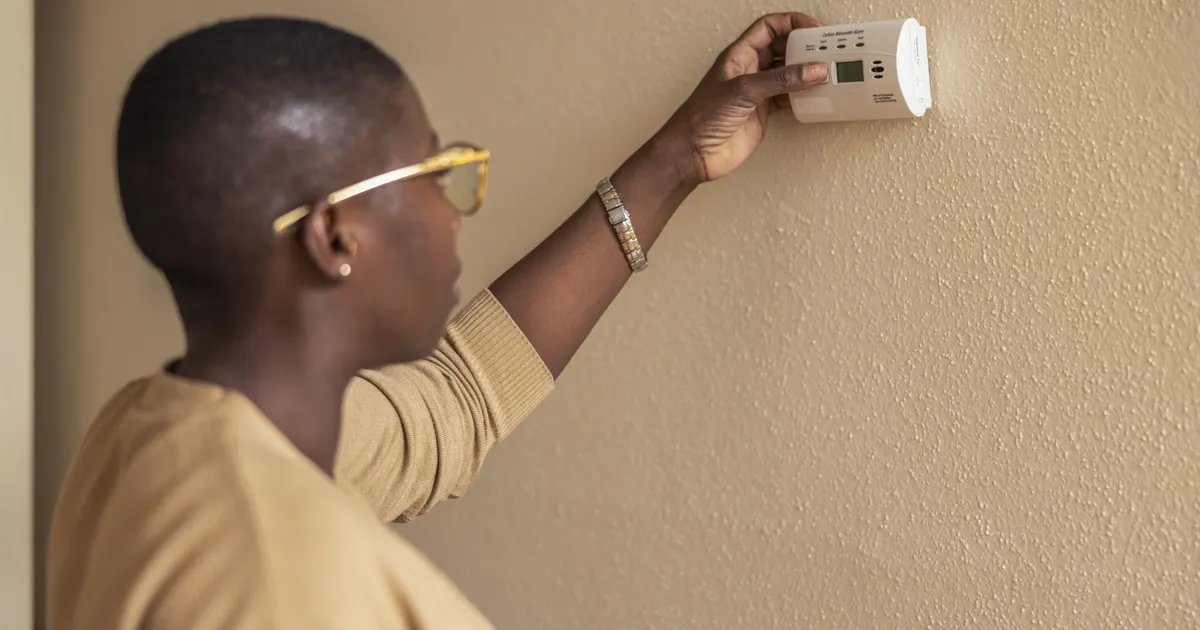
What a Heat Exchanger Does, and Why a Crack Matters
The heat exchanger sits deep inside a gas furnace, between the burners and the blower. Hot exhaust from the burners runs through its metal tubes. House air blows over the outside of those tubes, picks up the heat and goes into your ducts. The exhaust stays inside and leaves through the flue (Trane).
That metal wall is the only thing between the exhaust and the air you breathe. The exhaust carries carbon monoxide, carbon dioxide, nitrogen oxides and water vapor. A crack can let those gases into the air stream, and the blower spreads them through every room.
This matters in Union County: 82.9% of occupied homes here heat with utility gas, against 74.0% statewide (Census, ACS 2024). Furnaces of 90% AFUE or higher have two heat exchangers, a primary and a secondary; furnaces under 90% have one (Trane).
Signs of a Cracked Heat Exchanger
Trane lists these warning signs (source):
- Yellow or flickering burner flames instead of a steady blue flame
- Soot around the furnace or the flue pipe
- A strong, metallic odor
- A carbon monoxide alarm that keeps going off
- Banging or rattling sounds from the furnace
- The furnace short cycling: turning on and off quickly
- Rust or corrosion on the heat exchanger, or a visible crack
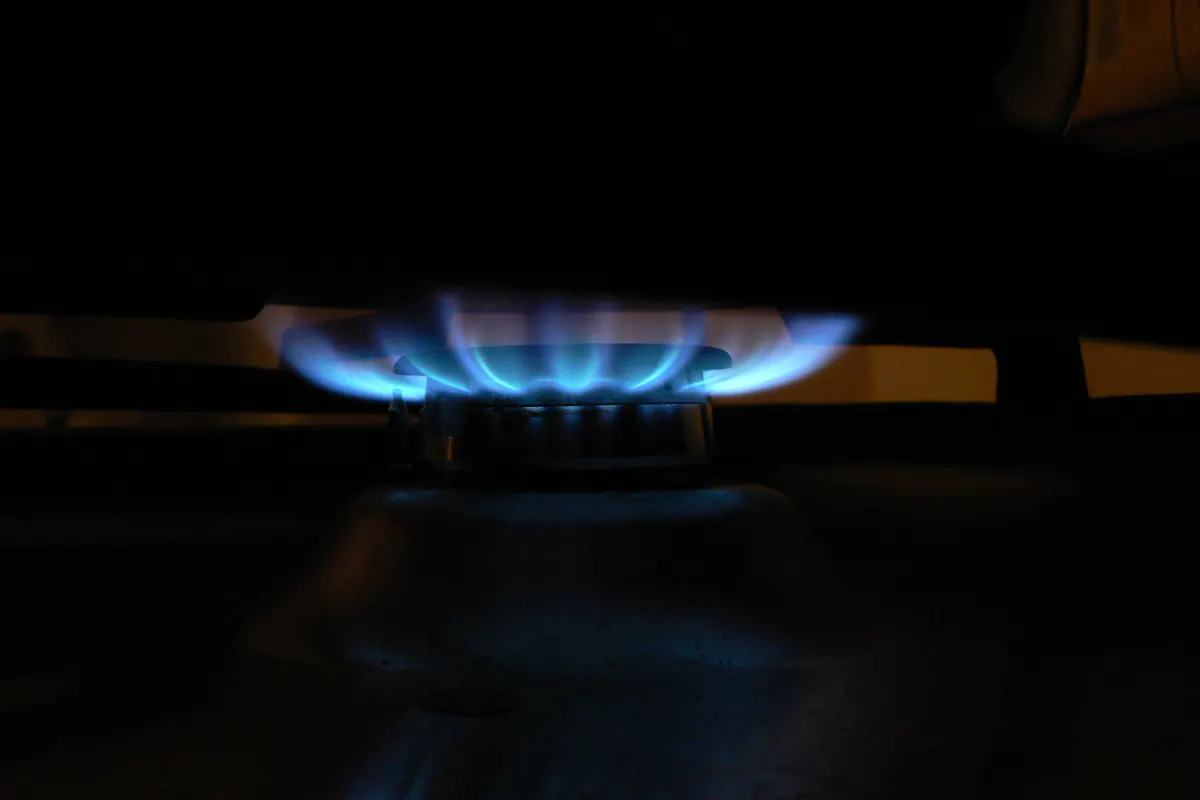
Ferguson adds water around the base of a high-efficiency furnace, and headaches, nausea or sleepiness while the heat is running (source). Those match the CDC's list of CO symptoms: headache, dizziness, weakness, upset stomach, vomiting, chest pain and confusion, often mistaken for the flu (CDC).
One honest warning: Trane notes these signs can also come from other furnace problems. A sign is a reason to test, not proof of a crack.
What to Do Tonight
If a CO alarm is sounding or anyone feels sick
- Get everyone, pets included, outside into fresh air and call 911 (PSE&G, CPSC).
- Get medical care for anyone with symptoms, and tell the doctor you suspect CO (EPA).
- PSE&G customers: call the PSE&G Emergency Service line, 1-800-880-7734, to have your appliances inspected. If CO is confirmed, do not go back in until it is fixed and declared safe (PSE&G).
- Elizabethtown Gas customers: its guidance for suspected CO is to leave, call 911 and get medical attention. If you smell gas, its leak line is 1-800-492-4009 (Elizabethtown Gas).
If you were told the heat exchanger is cracked but no alarm is sounding and nobody feels sick:
- Leave the furnace off. Once a crack is confirmed, contractors generally shut off the heating function and the gas under their local codes and company rules (Ferguson). Do not switch it back on to get through the night.
- Open a window, and turn off other fuel-burning appliances if you think CO is building up (EPA).
- Check that your CO alarms work. The CDC says to replace them per the maker's instructions or every 5 years (CDC).
- Stay warm safely. Never heat the house with a gas oven (CDC). Unvented gas or kerosene space heaters are CO sources too (EPA), and a generator belongs outside, more than 20 feet from windows, doors and vents (CDC).
- Call for help. Dimatic Control handles emergency heating and furnace repair across Union County.
Make Sure It Is Really Cracked
A cracked heat exchanger turns a repair call into a $1,000 to $12,000 decision, so ask for proof. You are not being difficult: Trane tells homeowners to ask to see the cracked part themselves (Trane), and HomeGuide warns about scams that make a heat exchanger look cracked to sell a new furnace (HomeGuide).
Ferguson's guidance to contractors lists four ways to check (source):
| Test | What it shows | Its limit |
|---|---|---|
| Combustion analysis | Measures CO in the flue and the room with the furnace running. | High CO can have other causes, so it points to a problem without pinning it on a crack. |
| Camera (borescope) or mirror inspection | A direct look at the metal, and a picture you can keep. | Hairline cracks can hide in tight bends or open only when the metal is hot. |
| Flame test | Whether the burner flame wavers or rolls when the blower starts. | A quick first check only; not enough on its own to condemn a furnace. |
| Pressure (isolation) test | Leaks between the combustion side and the house air you cannot see. | Takes much more time to seal off the heat exchanger and set up the measuring tool. |
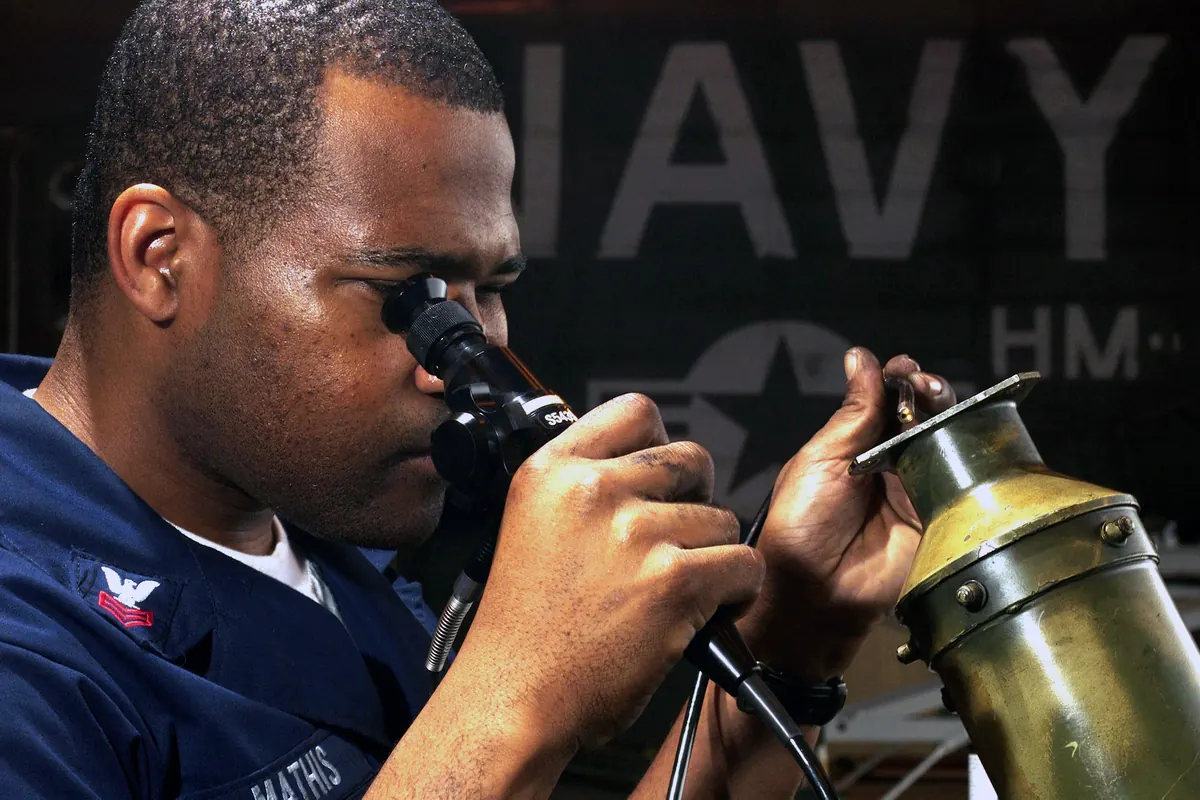
Ferguson calls a combustion analyzer reading of room and flue CO, followed by a careful camera inspection, the industry's best practice. For scale, the EPA puts normal CO levels in homes without gas stoves at 0.5 to 5 parts per million (EPA).
Ask for these before you agree to any replacement:
- The CO readings, with the furnace running, written down.
- A photo or video of the crack, and where it is.
- The furnace's model number, serial number and age.
- A warranty lookup for the heat exchanger on that serial number.
- Two written prices: the heat exchanger swap and a new furnace.
Whoever does the work needs a New Jersey HVACR license: state law (N.J.S.A. 45:16A-7) requires one for HVACR work unless an exemption applies (NJ HVACR Board). You can check a license on the state's license verification site. Dimatic Control's heat exchanger service in Union starts with a carbon monoxide test and a visual and camera inspection to confirm the crack, and ends with a combustion analysis.
What a Cracked Heat Exchanger Costs to Fix (2026)
There are two real fixes: a new heat exchanger in the same furnace, or a new furnace. Ferguson is plain that welding, sealing or patching the crack is not safe (source). Published market ranges:
| Job | Market range | Notes |
|---|---|---|
| Replace the heat exchanger, out of warranty | $1,000 - $3,000 | HomeGuide national range; Angi puts it at $1,250 - $3,000. |
| Heat exchanger part alone | $350 - $850 | Primary heat exchanger, most home gas furnaces (HomeGuide). |
| Labor to swap it | $650 - $2,150 | The furnace is taken apart and rebuilt around the new part (HomeGuide). |
| New gas furnace instead | $3,800 - $12,000 | Installed, from Carrier. Our NJ furnace cost guide breaks this down. |
National market ranges from HomeGuide, Angi and Carrier, read November 18, 2026. None is a Dimatic Control quote; your price depends on your furnace and your house.
Why labor is the bigger share. To reach the heat exchanger, the technician removes the burners, blower and controls, then rebuilds and tests the furnace. HomeGuide puts the job at 5 to 10 hours and Angi at 4 to 8 hours; Dimatic Control's heat exchanger pages list 4 to 8 hours as typical. Angi also notes some towns require a permit, at $50 to $300 (Angi).
The warranty math. Heat exchanger warranties run 10 to 20 years or the life of the furnace and cover the part, not the labor (HomeGuide). Carrier, for example, lists the heat exchanger as a covered part and says its standard warranty covers parts but not labor (Carrier FAQ), and its longer terms need the furnace registered within 90 days of installation (Carrier warranty). So with a covered part, the $350 to $850 part drops off the bill and the $650 to $2,150 of labor stays. The exception: Carrier also offers a 5-year parts plus 3-year labor limited warranty on registered new equipment through participating dealers (Carrier warranty). Ask your installer which warranty you have, or whether you bought a separate labor warranty.
Replace the Heat Exchanger or the Whole Furnace?
Age, warranty and the rest of the furnace decide it. Here is how Trane, Ferguson, HomeGuide and Angi frame the choice:
| Your furnace | Usually the better move |
|---|---|
| Under about 10 years old, part still under warranty, nothing else failing | Replacing the heat exchanger usually makes sense. You pay the labor. |
| Around 10 to 15 years old, or the part warranty has run out | Price both. If the swap comes near half the cost of a new furnace, replace the furnace. |
| 15 years or older, or other parts are also failing | A new furnace is usually the better buy. |
| The furnace was oversized for the house | A new heat exchanger in the same furnace can crack again. Resize instead. |
- Under 10 years with no other issues: HomeGuide's condition for a part swap; Ferguson says the same when the warranty covers the part.
- 10 to 15 years, or near 50% of a new furnace: Angi's threshold for replacing the furnace instead.
- 15 years and more frequent repairs: Trane suggests a new furnace; Ferguson puts the line at 12 to 15 years out of warranty.
- Oversized furnace: Ferguson warns a new heat exchanger in the same unit will lead to the same failure.
Carrier gives gas furnaces a 15 to 20 year life (Carrier). If yours is near that, read our furnace replacement cost guide for NJ and see our furnace replacement service.
What Cracks a Heat Exchanger, and How to Make Yours Last
Trane names four causes (source):
- Wear: the metal expands and contracts every time the furnace runs.
- Overheating: a clogged filter or blocked returns trap heat. Change the filter every 1 to 3 months.
- An oversized furnace: it short cycles, heating and cooling the metal too fast.
- Rust: condensation that does not dry out corrodes the metal from the inside.
The CDC and the EPA both call for a yearly professional inspection of the furnace (CDC, EPA). Trane says the technician checks the heat exchanger for corrosion and damage at that visit. Book a furnace tune-up before the first cold night, and read our furnace carbon monoxide safety guide for the rest of the house.
New Jersey's Carbon Monoxide Alarm Rules
- Where: one- and two-family homes with a fuel-burning device or an attached garage need a CO alarm in the immediate vicinity of the sleeping areas. Battery, plug-in or hard-wired alarms are allowed if listed to UL 2034 (N.J.A.C. 5:70-4.19).
- When you sell or rent: the owner needs a certificate of smoke alarm, carbon monoxide alarm and fire extinguisher compliance from the local enforcing agency before the home is sold, leased or re-occupied (N.J.A.C. 5:70-2.3).
- How long: New Jersey added CO alarm rules to its fire code in 2003 and extended them to all buildings with fuel-fired equipment or attached garages on September 3, 2017 (NJ Division of Fire Safety).
- Beyond the minimum: the CPSC recommends a CO alarm on every level of the home and outside sleeping areas (CPSC).
An alarm is your last line, not your test. The EPA says a CO detector is a backup, not a replacement for proper use and maintenance of fuel-burning appliances (EPA).
Told Your Heat Exchanger Is Cracked?
Keep the furnace off and call us. Dimatic Control provides heat exchanger replacement and furnace replacement across Union County.
Heat Exchanger Service Near You
Dimatic Control is based in Union. Heat exchanger replacement by town:
- Heat exchanger replacement in Union
- Heat exchanger replacement in Elizabeth
- Heat exchanger replacement in Cranford
- Heat exchanger replacement in Westfield
Cracked Heat Exchanger: Frequently Asked Questions
How can you tell if a heat exchanger is cracked on a furnace?
Only a technician can confirm it. Warning signs include a yellow or flickering burner flame instead of a steady blue one, soot around the furnace or flue pipe, a strong metallic odor, rust on the part, banging or rattling, short cycling and a CO alarm that keeps going off. Those signs can come from other furnace problems too. The proof is a combustion analysis that measures carbon monoxide with the furnace running, followed by a camera inspection of the metal, which Ferguson calls industry best practice. Ask for the CO readings and a photo of the crack.
How much does it cost to fix a cracked heat exchanger?
Replacing a furnace heat exchanger costs $1,000 to $3,000 out of warranty in HomeGuide's national figures: $350 to $850 for the part and $650 to $2,150 for the labor. Angi puts the job at $1,250 to $3,000, averaging $1,750. When the part is still under the manufacturer's warranty, you usually pay only the labor, because furnace part warranties do not cover labor. These are national market ranges, not a Dimatic Control quote.
What is the average lifespan of a furnace heat exchanger?
Trane says a heat exchanger should last 10 to 15 years or more with good maintenance, and HomeGuide puts the average at 15 to 20 years. Trane adds that if your furnace is newer than that, a crack is unlikely to be the problem, which is a good reason to ask for proof on a young furnace.
Can a cracked heat exchanger be repaired or welded?
No. Ferguson's guidance to contractors is that a cracked heat exchanger cannot safely be welded, sealed or patched, and that the only safe options are replacing the heat exchanger or replacing the furnace. Trane also does not recommend trying to repair one.
Is it safe to run a furnace with a cracked heat exchanger?
No. A heat exchanger keeps combustion gases, including carbon monoxide, out of the air your furnace blows through the house. Once a crack is confirmed, contractors generally shut off the furnace's heating and gas under their local codes and company rules. Leave it off until it is fixed, keep working CO alarms near the bedrooms, and do not heat the house with a gas oven.
Does the warranty cover a cracked heat exchanger?
Often the part, rarely the labor. HomeGuide says heat exchanger warranties run 10 to 20 years or the life of the furnace and cover the part, not labor. Carrier lists the heat exchanger as a covered part and says its standard warranty covers parts but not labor, and its longer warranty terms depend on registering the furnace within 90 days of installation. Carrier also offers a 5-year parts plus 3-year labor limited warranty on registered new equipment through participating dealers, so check which one you have. Have the model and serial number ready so your contractor can look up the coverage.
Is replacing a heat exchanger a big job?
Yes, it takes most of a day. Angi puts most replacements at 4 to 8 hours and HomeGuide at 5 to 10 hours, because the burners, blower and controls come out before the heat exchanger can be reached, and everything is rebuilt and tested afterwards.
How does a heat exchanger work?
Hot gases from the burners pass through a set of sealed metal tubes, which heat up. The blower pushes house air over the outside of those tubes, and that warmed air goes into your ducts, while the gases stay inside and leave through the flue. Furnaces of 90% AFUE or higher have a second heat exchanger that pulls more heat from the exhaust, according to Trane.
What is a heat exchanger made of?
Metal. Trane says its primary and secondary heat exchangers are made of stainless steel to resist corrosion, and are crimped rather than welded to prevent cracks from heat stress. HomeGuide notes that stainless steel heat exchangers cost more than aluminum ones.
How much does it cost to replace a heat exchanger on a boiler?
HomeGuide puts a heat exchanger for a boiler at $100 to $300 on average, depending on the boiler type, size and BTU rating. It notes that most boilers use a brazed plate heat exchanger and that modern condensing boilers have two. HomeGuide does not say whether that figure includes labor, so ask for a written quote that lists the part and the labor separately. The other prices in this guide are for furnaces.
Will a carbon monoxide alarm warn me about a cracked heat exchanger?
It is your backup, not a test. A crack that is leaking enough CO can set off an alarm, which is why New Jersey requires CO alarms near the sleeping areas of homes with fuel-burning appliances. But the EPA says a CO detector should be a backup, not a replacement for proper use and maintenance of fuel-burning appliances. A quiet alarm does not prove the heat exchanger is sound; a yearly furnace inspection is how cracks get found.
Sources
Every figure on this page was read from the sources below on November 18, 2026. The warranty math is our own arithmetic from HomeGuide's part and labor ranges.
- Trane, Cracked Heat Exchanger: What Does It Mean?: How a heat exchanger works, the warning signs, the four causes, a 10-15 year life with good maintenance, $1,000-$3,000 to replace, and the advice to ask to see the cracked part.
- Ferguson, Furnace heat exchanger diagnostics: verifying cracks: The four test methods and their limits, combustion analysis plus a camera inspection as best practice, no safe welding or patching, and when a part swap or a new furnace makes sense.
- HomeGuide, heat exchanger replacement cost (updated June 23, 2025): $1,000-$3,000 installed, $350-$850 for the part, $650-$2,150 labor, 5-10 hours, 15-20 year life, warranty covers the part not labor, combustion analysis to verify, and the warning about scams.
- Angi, heat exchanger replacement cost (updated October 26, 2026): $1,250-$3,000 with a $1,750 average, 4-8 hours, permits $50-$300, and the 10-15 year / 50% rule.
- Carrier, new gas furnace cost: A new gas furnace at $3,800-$12,000 installed and a 15-20 year furnace life.
- Carrier, homeowner FAQs: The heat exchanger is a covered part; Carrier's standard warranty covers parts but not labor.
- Carrier, warranty registration and coverage: Registration within 90 days of installation for the longer parts warranty, and the Consumer Choice option of a 5-year parts plus 3-year labor limited warranty through participating dealers.
- CDC, Carbon Monoxide Poisoning Basics (updated October 26, 2026): More than 400 deaths, 100,000 emergency visits and 14,000 hospital stays a year; symptoms; yearly furnace service; replace CO alarms every 5 years; never heat with a gas oven.
- U.S. Consumer Product Safety Commission, Carbon Monoxide: CO alarms on every level and outside sleeping areas; get to fresh air and call 911.
- U.S. EPA, Carbon Monoxide's Impact on Indoor Air Quality: Leaking furnaces as a CO source, normal home levels of 0.5-5 ppm, and a yearly professional inspection of furnaces, flues and chimneys.
- U.S. EPA, Protect your family and yourself from carbon monoxide poisoning: What to do when a CO alarm sounds, and an alarm as a backup, not a replacement for maintenance.
- PSE&G, Carbon Monoxide Safety: Evacuate, call 911, then the PSE&G Emergency Service line at 1-800-880-7734 to have appliances inspected.
- Elizabethtown Gas, Safety & Education: If you suspect CO exposure, leave, call 911 and seek medical attention; gas leaks 1-800-492-4009.
- N.J.A.C. 5:70-4.19 (NJ Uniform Fire Code), via Cornell LII: CO alarms near sleeping areas in one- and two-family homes with a fuel-burning device or attached garage.
- N.J.A.C. 5:70-2.3 (NJ Uniform Fire Code), via Cornell LII: The smoke, CO alarm and extinguisher certificate needed before a sale, lease or change of occupancy.
- NJ Division of Fire Safety, Bulletin 2017-1: carbon monoxide detection: CO rules first added in 2003, extended to all buildings with fuel-fired equipment from September 3, 2017.
- NJ State Board of Examiners of HVACR Contractors, FAQ: N.J.S.A. 45:16A-7: HVACR work requires a state license unless an exemption applies.
- U.S. Census Bureau, American Community Survey 2024 1-year, table B25040 (via Census Reporter): 170,828 of 206,050 occupied Union County homes (82.9%) and 74.0% of New Jersey homes heat with utility gas.
Related Guides
Furnace Repair
Gas furnace diagnosis and repair across Union County
Furnace Replacement Cost in NJ
What a new furnace costs if the heat exchanger is not worth replacing
Furnace Carbon Monoxide Safety
Keeping a gas-heated home safe all winter
Emergency Heating Service
No heat, or a furnace shut off for safety